

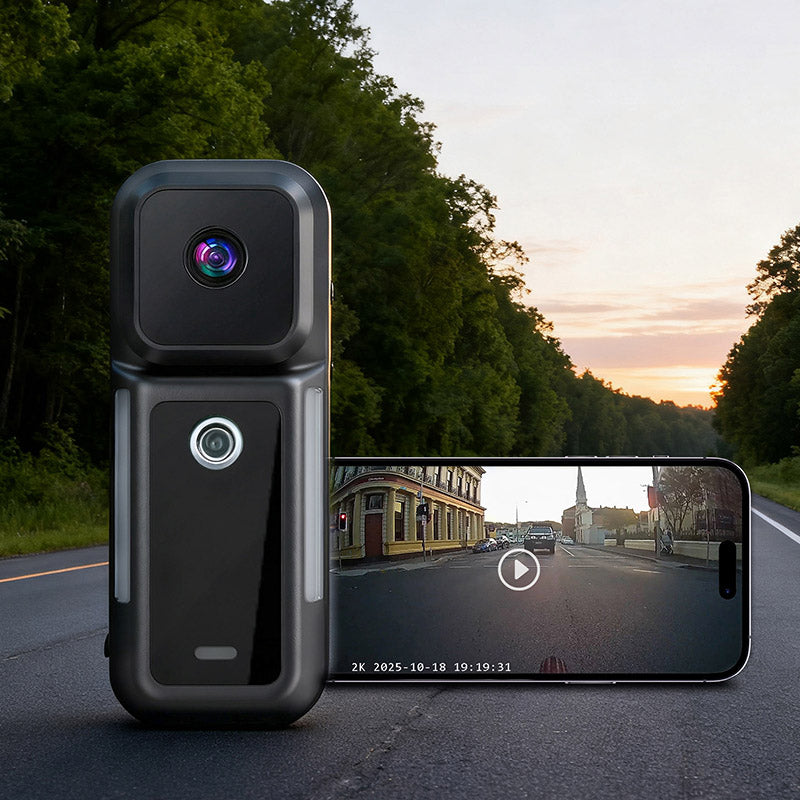
A bike light and camera combines bicycle lighting with video recording in one device. Depending on the product, the camera and light may face forward or rearward.
A front-facing system records the road ahead while providing forward lighting. A rear bike camera light records what happens behind the rider while helping make the cyclist more noticeable to approaching traffic.
For cyclists interested in rear visibility and incident documentation, a rear camera tail light is the more relevant configuration. This guide focuses on what to evaluate before choosing one, including video quality, lighting, battery life, file access, and mounting.

Front vs. Rear Bike Light and Camera: What’s the Difference?
The main difference is the direction of coverage.
-
Front-facing systems record the road ahead while providing forward lighting. Mounting location depends on the specific product.
-
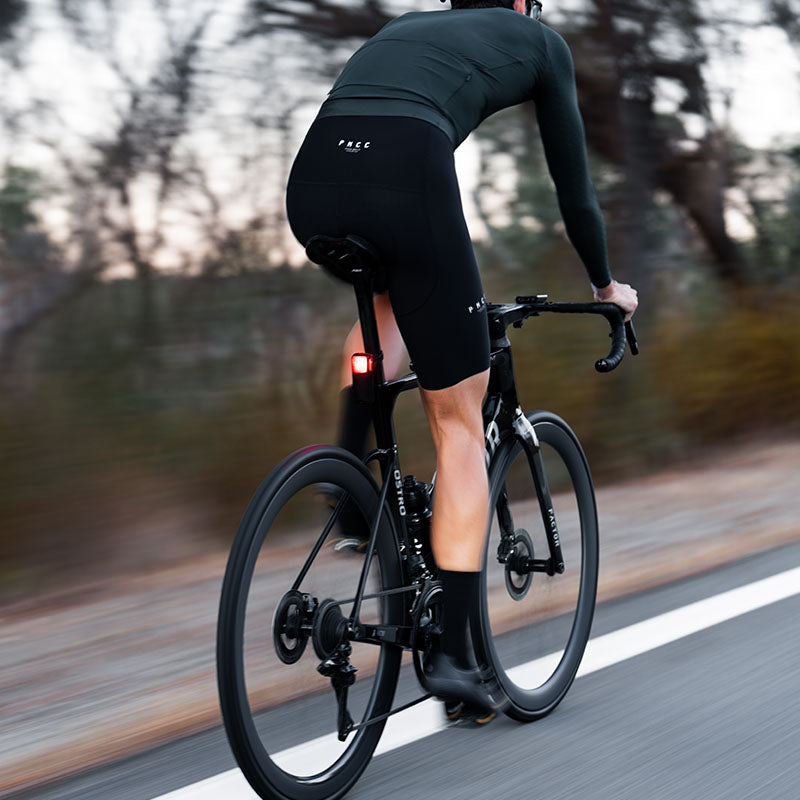
Rear-facing systems record activity behind the rider while providing rear visibility. They may mount around the seatpost, saddle area, or another supported rear position.
If documenting vehicles and road activity approaching from behind is the priority, a rear-facing camera light is the more relevant option.
What to Look for in the Camera
Camera specifications matter, but a large resolution number alone does not determine how useful recorded footage will be. Video quality, field of view, file access, and camera positioning all affect everyday use.
Video Quality and Resolution
Higher resolution can preserve more image detail, but it does not guarantee readable footage in every situation.
License plate visibility and other details can also depend on:
-
vehicle distance
-
relative motion
-
ambient lighting
-
camera angle
-
vibration
-
lens cleanliness
Low light, changing shadows, road movement, and poor positioning can affect footage regardless of the resolution setting.
Field of View
Field of view determines how much of the road behind the bicycle appears in the recording.
A wider field of view can capture more surrounding road context, while a narrower field of view concentrates the image on a smaller area.
Consider how much rearward and surrounding coverage you want rather than assuming that the widest available view is automatically the best choice.
Storage, File Access, and Clip Management
Recording useful footage is only part of the experience. You also need a practical way to find, transfer, and save clips afterward.
Before choosing a camera light, check:
-
the supported storage format and capacity
-
whether loop recording is available
-
how selected or important clips are protected
-
how footage is transferred to a phone or computer
-
whether viewing or downloading footage requires an app
A straightforward file-access process can be particularly useful when you need to locate a specific clip after a ride.

What to Look for in the Rear Light
Camera features should not overshadow the lighting function. A rear camera light still needs to provide appropriate visibility for the conditions in which you ride.
Rear and Side Visibility
Consider how the light is visible from behind and from relevant viewing angles.
Traffic may approach from different angles at intersections, curves, and lane merges, so light distribution can matter alongside headline brightness figures.
Riders interested in dedicated rear lighting without built-in video recording can explore RAVEMEN's bike tail lights for additional rear-light options.
Light Output and Modes
Available brightness levels and lighting modes vary by product.
When evaluating a camera tail light, consider whether its available steady, flashing, or other supported modes suit the conditions in which you normally ride.
The goal is not simply to choose the device with the most lighting modes, but one whose lighting function matches your riding environment.
Battery Life While Recording and Lighting
Battery life deserves particular attention because the device may be powering both video recording and rear lighting.
Instead of relying only on a maximum runtime figure, check the manufacturer's stated operating time for the configuration you expect to use.
Consider:
-
runtime with both recording and lighting active
-
runtime at the light modes you expect to use
-
whether recording settings affect operating time
-
charging time and charging requirements
Avoid assuming that maximum camera-only or light-only runtime applies when both functions are operating together.
Example of an Integrated Camera Tail Light: RAVEMEN NT301
The RAVEMEN NT301 camera tail light provides an example of how rear lighting and video recording can be combined in one device.
The NT301 features a 138° wide-angle camera capable of recording up to 2K at 25fps together with rear and side lighting visibility. It also supports loop recording and automatic locking of selected footage following detected accident scenarios.
These are specific features of the NT301 and should not be treated as standard features of every rear bike camera light.
Mounting Clearance and Space
Mounting position affects both camera framing and rear-light visibility.
Before buying, check the rear of your bike for enough space to install the device without blocking either function.
Check for Obstructions
Potential obstructions include:
-
saddle bags
-
seat packs
-
rear racks
-
fenders
-
clothing
-
other rear-mounted accessories
Both the camera lens and light should have a clear, unobstructed position.
A secure mounting position can also help reduce unwanted movement and keep the camera properly aligned.
Seatpost Compatibility
Seatpost and rear mounting designs vary between bicycles.
If your bike uses an aero, D-shaped, or other non-standard seatpost, verify that the mounting hardware is compatible before purchasing.
For additional information about RAVEMEN mounting systems and accessories, see the bike light mounting and compatibility guide.
Practical Limitations of Rear Camera Lights
A Camera Records Events — It Does Not Replace Observation
A rear bike camera light provides lighting and documentation functions, but it should not be treated as a collision-prevention device.
Riders still need to check traffic directly before turning, changing lanes, or altering their road position.
The camera records what happens behind the bicycle; it does not replace the rider's own traffic judgment.
Lens Condition Affects Recorded Footage
A rear-mounted camera can be exposed to rain, road spray, dust, and dirt.
Check the lens regularly and clean away water or debris when needed. A high-resolution camera cannot produce useful footage if its view is obstructed.
Features Vary by Device
Do not assume that every camera tail light provides the same:
-
video resolution
-
recording modes
-
field of view
-
storage system
-
lighting modes
-
battery runtime
-
mounting options
-
weather resistance
Review the manufacturer's specifications for the individual device you are considering.
Conclusion
A bike light and camera can be a practical option for cyclists who want rear lighting and video recording in a single setup.
When choosing a rear bike camera light, look beyond headline camera resolution. Video quality, field of view, file access, battery life during simultaneous use, rear-light visibility, and mounting clearance all affect how useful the device will be on everyday rides.
The right setup should fit your bike without obstruction, provide the rear visibility you need, record the area you want to capture, and offer a practical way to access footage afterward.
Frequently Asked Questions About Rear Bike Camera Lights
Can a rear bike camera light replace direct shoulder checks?
No. A camera records footage behind the bicycle but does not replace direct traffic observation. Riders should still check surrounding traffic before turning, changing lanes, or changing road position.
Does high video resolution guarantee readable license plates?
No. Higher resolution can preserve more detail, but license plate readability also depends on distance, motion, lighting, camera angle, vibration, and lens condition.
How should I evaluate battery life on a camera tail light?
Check the manufacturer's stated runtime when both the camera and light are operating simultaneously. Runtime can vary according to lighting mode, recording settings, battery capacity, and product design.
How do I access footage from a bike camera light?
File access varies by device. Some systems may use removable storage, while others may support app-based transfer or other methods.
Before buying, check how footage can be viewed, transferred, saved, and protected.

댓글 남기기
모든 댓글은 게시 전 검토됩니다.
이 사이트는 hCaptcha에 의해 보호되며, hCaptcha의 개인 정보 보호 정책 과 서비스 약관 이 적용됩니다.