

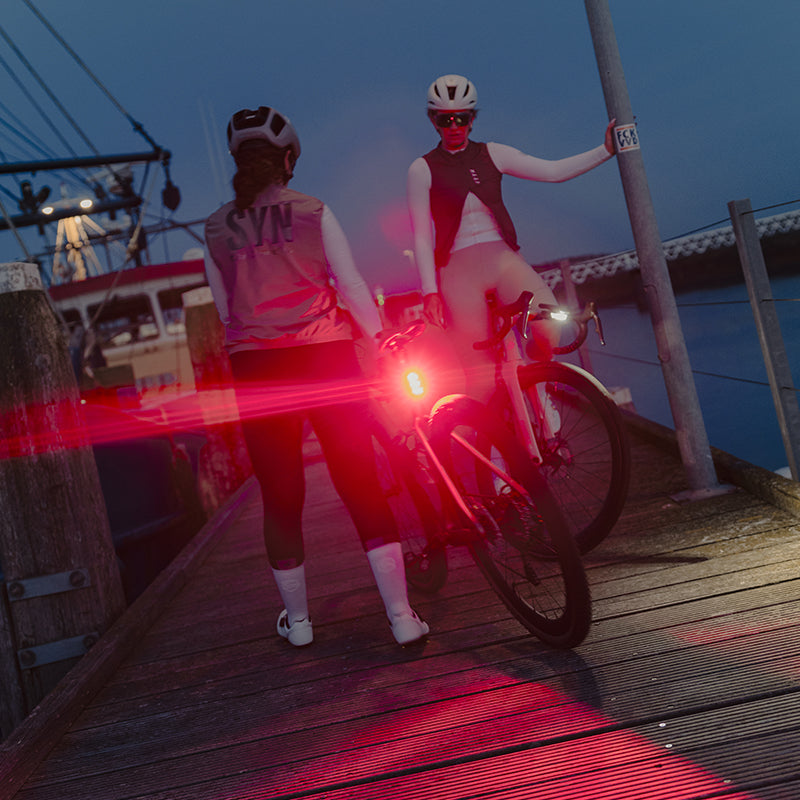
If you regularly ride in city traffic, at night, or on busy roads, the answer is yes. A bike brake light can provide an extra layer of safety by communicating your intentions to drivers behind you. The real advantage of a bike brake light is not simply making you visible; it helps others understand when you are slowing down. That extra moment of communication can give motorists and fellow cyclists more time to react, reducing the risk of rear-end collisions.
In this guide, we'll explain how a brake sensing tail light works, who benefits most from one, and what features you should consider before buying.

What Is a Bike Brake Light?
A bike brake light is a rear light that automatically becomes brighter or changes its flashing pattern when you slow down. Instead of just making your bicycle visible, it also signals your deceleration, much like a car's brake lights. Most modern models achieve this through an internal accelerometer. When the sensor detects a speed reduction, the light temporarily switches to a brighter mode before returning to its normal setting.
This is why many products are also marketed as brake-sensing tail lights or smart tail lights. While a smart taillight may include additional functions such as automatic on/off or ambient light sensing, brake detection is one of its most valuable safety features.
Compared with a traditional rear light that simply flashes continuously, a bike brake light communicates both your presence and your actions.
Why Is It Safer Than a Standard Tail Light?
A standard tail light tells people behind you that a bicycle is ahead. A bike tail light tells them something more important: it tells them that your speed is changing.
In urban traffic, drivers constantly process visual information from cars, pedestrians, buses, and cyclists. They are already conditioned to recognize red brake lights as a warning to slow down. When your bicycle uses a similar visual cue, drivers can react more quickly and predict your movement more accurately.
This becomes particularly valuable when:
-
Approaching intersections
-
Slowing for pedestrians
-
Avoiding potholes
-
Entering a sharp corner
-
Riding in stop-and-go traffic
The sudden increase in brightness attracts attention far more effectively than a steady flashing light. Instead of wondering whether you're continuing forward or preparing to stop, following traffic receives a clear signal.
For group rides, the benefit is equally practical. Riders behind can immediately recognize braking events, helping reduce chain-reaction crashes.
Do You Actually Need a Bike Brake Light?
The answer depends largely on your riding style and environment. Not every cyclist needs a bike brake light, but not every cyclist faces the same risks either.
-
If you regularly ride in traffic, after dark, or at higher speeds, the extra communication provided by a brake sensing tail light can improve safety.
-
For riders on quiet bike paths or low-traffic roads, a standard rear light may be enough.
The following scenarios can help you determine whether a smart tail light is worth the investment.
Urban commuters
If you commute through busy streets every day, a bike brake light is highly recommended.
City riding involves frequent stops at traffic lights, crosswalks, and intersections. Cars may follow closely, while delivery vehicles and buses often create unpredictable traffic patterns. A brake sensing tail light provides additional communication that can improve your visibility in these situations.
For many commuters, it is one of the simplest safety upgrades available.
Night riders
The darker the environment, the greater the benefit.
Although a standard rear light helps others see you, depth perception becomes more difficult at night. Drivers may struggle to judge whether you're maintaining speed or slowing down. A bike brake light reduces this uncertainty by producing an obvious braking signal whenever you decelerate.
If you frequently ride before sunrise or after sunset, this feature can make your intentions much clearer.

Fast road cyclists
Road cyclists often travel at speeds exceeding 18-20 mph (30 km/h). At these speeds, small changes in velocity may not be immediately noticeable to following vehicles. A brake light provides an earlier warning than visual observation alone. Similarly, cyclists descending hills or riding in fast-moving groups benefit from clearer communication when slowing unexpectedly.
Recreational riders
Not everyone needs a smart tail light.
If most of your rides take place on protected bike paths, quiet parks, or low-traffic rural roads, a quality standard rear light may already provide adequate visibility. In these environments, the likelihood of rear-end conflicts is significantly lower than in dense urban traffic.
For occasional weekend rides, investing in a brake light becomes more a matter of preference than necessity.
When Is a Standard Tail Light Enough?
A traditional rear light still performs an essential safety function. It is lightweight, affordable, and simple to operate.
It may be sufficient if you:
-
Ride primarily during daylight
-
Use separated cycling infrastructure
-
Travel at moderate speeds
-
Rarely encounter heavy traffic
-
Want a simple solution with a long battery life
However, if your riding conditions change, such as commuting during winter evenings or navigating busy city streets, you may benefit from upgrading to a smart tail light with brake detection. The decision should be based on your current riding environment rather than on the latest technology trends.
What Should You Look for When Choosing a Bike Brake Light?
Not all bike brake lights perform equally well. Several features deserve attention when comparing models.
Reliable brake detection
The sensor should activate consistently without excessive false triggers caused by bumps or rough roads. Smooth and accurate brake detection is far more valuable than simply having the feature listed on the specification sheet.
Wide visibility angle
Visibility isn't only about brightness. Drivers may approach from different angles, especially at intersections.
Some newer designs use horizontally mounted light strips to improve side visibility. For example, certain models, like RAVEMEN CL01, provide a 300-degree wide-angle beam, making the rider easier to see from multiple directions rather than only directly behind.
Lightweight and compact design
Cyclists generally prefer accessories that don't add unnecessary bulk. Modern brake lights can weigh as little as around 22 grams, fitting neatly beneath the saddle while maintaining a streamlined appearance.
Battery life and convenience
Frequent charging discourages regular use. Look for models offering long runtimes, USB-C charging, and automatic power management. Features such as auto on/off, where the light turns off after inactivity and activates again when movement is detected, help conserve battery while improving convenience.
Weather resistance
Cyclists ride in changing weather conditions, so water resistance is essential. An IPX6-rated light can withstand heavy rain and daily commuting, making it a practical choice for year-round riders.
Is a Bike Brake Light Worth It?
A bike brake light is not essential for every cyclist, but it offers clear advantages for riders who regularly share the road with motor vehicles or cycle after dark.
Unlike a standard rear light that simply makes you visible, a brake sensing tail light communicates your intentions by signaling when you slow down. That additional information can improve driver reaction time and reduce the likelihood of rear-end incidents. For urban commuters, night riders, and faster road cyclists, a smart tail light is a worthwhile investment in safety. For casual recreational riders on protected paths, a quality traditional rear light may still be sufficient.
Ultimately, the best choice depends on where, when, and how you ride. The goal is not just to be seen—but to help others understand what you're about to do.
FAQs
Is a bike brake light better than a standard rear light?
A bike brake light adds an extra layer of communication by automatically signaling deceleration. While a standard rear light improves visibility, a brake light helps following traffic anticipate your movements.
How does a brake sensing tail light work?
Most models use an internal accelerometer that detects speed changes. When you slow down, the light automatically switches to a brighter mode or a different flash pattern for a short period.
Can I use a bike brake light during the day?
Yes. Many modern bike brake lights include daytime modes designed to remain highly visible in bright sunlight, making them effective even during daytime commuting.
Will a brake light replace hand signals?
No. A bike brake light should complement, not replace, proper hand signals and defensive riding habits. Using both provides the clearest communication with other road users.

Lasă un comentariu
Toate comentariile sunt moderate înainte de a fi publicate.
Acest site este protejat de hCaptcha și hCaptcha. Se aplică Politica de confidențialitate și Condițiile de furnizare a serviciului.