


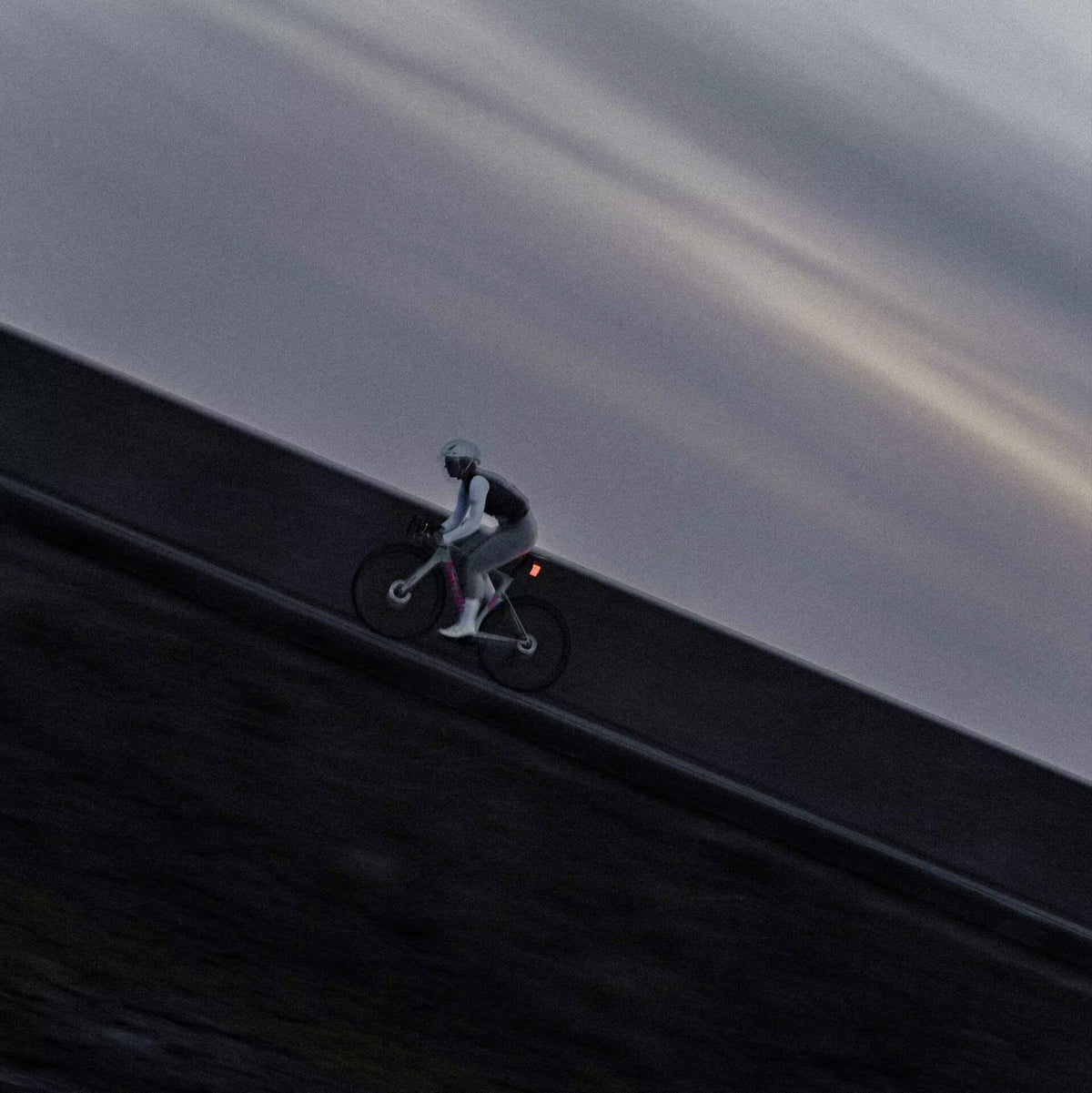
When you hit the road on two wheels, being seen is just as important as seeing where you’re going. Many cyclists focus heavily on powerful front headlights, but a high-quality rear bike light is arguably the single most critical safety accessory you can own. Whether you’re commuting in urban traffic, training on rural roads, or riding at dawn, the right rear light keeps you visible to approaching vehicles in all conditions.
In this guide, we’ll explain why a tail light is essential, how to choose the best rear bike light for your needs, and why smart features and rechargeable designs are changing the game.

Why You Need a Dedicated Rear Bike Light?
Cycling safety isn’t just a nighttime concern. Reports from the National Highway Traffic Safety Administration (NHTSA) show that bicycle crashes occur in both daylight and low-light conditions, where factors such as reduced visibility, driver distraction, and failure to detect cyclists can all play a role.
A dedicated rear bike light serves as a critical visibility tool, helping alert drivers to your presence from a distance. Modern rear bike lights are designed to improve visibility in a wide range of conditions, including fog, rain, and bright daylight, helping cyclists remain more noticeable in traffic. So, we recommend using them at all times, not just after dark.
How to Choose the Best Rear Bike Light?
Selecting the right tail light can be overwhelming with so many options available. To find the best bicycle taillight for your riding habits, focus on these four critical performance metrics:
1. Lumens and Brightness Modes
The brightness of a tail light is measured in lumens. For basic nighttime visibility, 20 to 70 lumens may be adequate. However, if you frequently ride in heavy traffic or during broad daylight, you need significantly more power.
For daytime use, your light should ideally emit at least 100 lumens to stand out against direct sunlight. High-performance models often push 200 to 350 lumens, with some premium units reaching 500 lumens for daylight dominance. Look for lights with multiple modes, including high, medium, low, and various flashing patterns, so you can adjust intensity based on the environment.
For riders who prioritize daytime safety, the Ravemen TR600 is designed for maximum visibility. With up to 600 LED lumens and an enhanced warning flashing mode, it helps cyclists stand out in bright conditions and can be seen from up to 3.2 km away.
2. Beam Angle and Side Visibility
A narrow beam only protects you from directly behind. The best rear bike lights feature wide-angle optics, often delivering 180 to 300 degrees of visibility. This is crucial because cars approaching from side streets or changing lanes need to see you from angles, not just straight on.
3. Battery Life and Charging
Today, most cyclists prefer a rechargeable bike tail light over disposable battery units. USB-C rechargeable models offer convenience, environmental benefits, and consistent performance. Check the runtime on different modes before you buy. A quality light should last several hours on high brightness and significantly longer on flashing or eco modes.
For example, the Ravemen CL01 offers a practical balance between battery life and convenience. It provides up to 45 hours of runtime on a full charge and features a hidden USB-C charging port for easy and protected charging.
4. Quality and Waterproofing
If you're not just riding in the city, your bike lights may also face the challenges of rain, mud, and road vibrations. Look for an IPX4 rating at a minimum (splash resistant), with IPX6 or higher offering protection against powerful water jets.
What Makes a Smart Rear Bike Light Different?
A smart tail light integrates sensors and intelligent programming to enhance visibility and safety without requiring manual adjustments. Instead of functioning as a constant-output light, it reacts dynamically to your riding behavior.
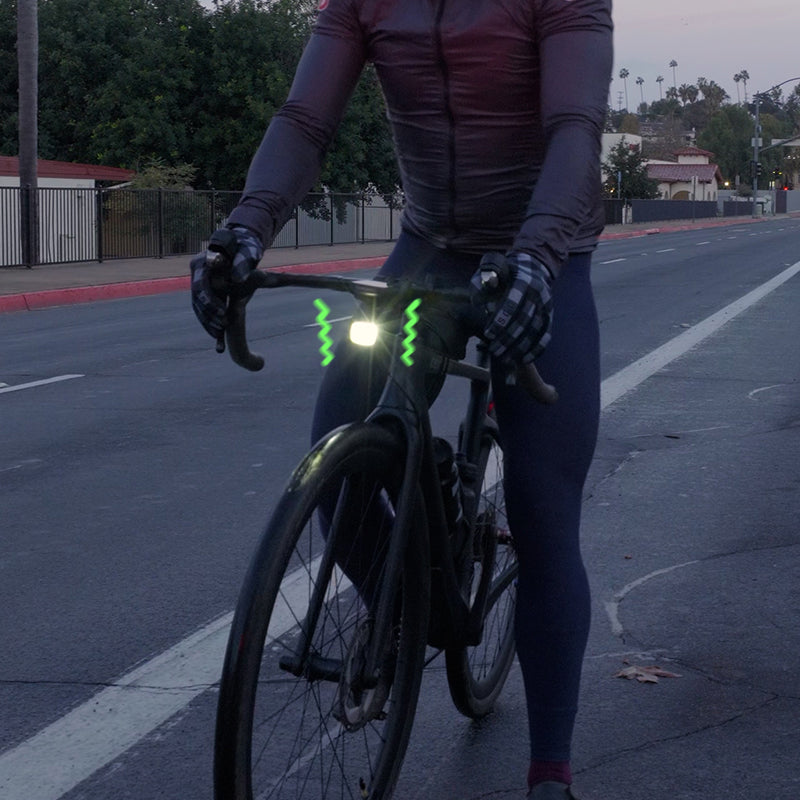
One key feature is built-in motion sensing for brake detection. Like Ravemen TR 600, when deceleration is detected, the rear light automatically highlights for approximately 3 seconds, creating a strong visual signal similar to a vehicle brake light. This sudden boost helps alert following traffic that you are slowing down, improving reaction time and overall safety in urban and road environments.
In addition to braking response, smart tail lights also include motion-based auto on/off functionality. The light automatically turns off after being stationary for about 2 minutes to conserve battery, and it instantly reactivates when vibration is detected as you start riding again. This eliminates the need for manual operation and ensures the light is always ready when needed.
By combining brake detection with motion-based power management, smart rear bike lights provide a more adaptive and reliable safety system compared to traditional fixed-mode lights, helping cyclists stay visible with minimal effort.
Practical Tips for Maximizing Your Visibility
Owning the best rear bike light is only half the battle; using it correctly makes all the difference.
Mount the Bike Tail Light at the Right Height and Location
Your rear light should be mounted on your seat post at a height where it is clearly visible to drivers, typically between 12 and 48 inches off the ground. Avoid mounting it so low that it gets blocked by a saddlebag or so high that it blends into streetlights.
Use Daytime Flash Modes
In bright conditions, visibility actually becomes more challenging, not easier. That’s why dedicated daytime flash or pulse modes are essential when riding in full sunlight. These high-contrast flashing patterns are designed to stand out against visual noise such as glare, reflections, and busy traffic environments.
Unlike steady lighting, daytime flash modes create a more attention-grabbing signal that is easier for drivers to notice in their peripheral vision. This makes them especially effective in urban traffic, where quick visual recognition can significantly improve rider safety.
Combine Flashing with Steady Modes
Flashing and steady lighting serve different but complementary purposes. A flashing red light is highly effective at grabbing attention and signalling “there is a cyclist ahead,” especially in busy or visually noisy traffic environments. However, a steady light provides a consistent reference point, helping drivers better judge their exact position, distance, and movement over time.
When your setup allows it, combining both modes can significantly improve overall visibility. Some riders achieve this by using a dual-mode rear light, while others pair a primary flashing light with a secondary steady light for redundancy. This layered approach increases recognition speed while also improving positional awareness for approaching traffic.
Smart Tail Light: The Next Generation of Cycling Safety
Choosing a rear bike light is ultimately about matching visibility needs with real-world riding conditions. Factors like brightness, battery life, mounting stability, and available lighting modes all play a role in how effectively a rider can stay visible on the road.
For everyday cyclists, especially those commuting in traffic or riding in variable lighting, features such as wide-angle visibility, flashing daytime modes, and motion-based automation can add a meaningful layer of convenience and safety.
Modern designs, such as bike tail lights from RAVEMEN, reflect this shift toward more adaptive lighting systems, integrating features such as brake detection and auto on/off functions to support consistent visibility with minimal manual input.
Bike Tail Light FAQs
How to turn on the bike rear light?
In general, most bike rear lights are turned on using a simple physical control button. Typically, you just press and hold the power button for a couple of seconds until the light turns on. After activation, many models allow you to short-press the same button to switch between steady and flashing modes.
For example, you can press and hold the RAVEMEN NT301 bike rear light for about 1.5 seconds until it powers on. Then short-press the same button to cycle through lighting modes (steady and flashing options)
What is a tail light called?
A tail light on a bicycle is commonly referred to by several names, depending on the context and region. The most widely used term is "rear bike light", which clearly describes its position and function. It is also often called a "bike tail light" or simply a "rear light".
In cycling and safety discussions, these terms are used interchangeably, but they all refer to the same device: a light mounted at the back of a bicycle to improve visibility and alert others to your presence, especially in low-light conditions or traffic.
Is a rear light alone enough for night riding?
Not really. A rear bike light mainly helps others see you from behind, but it doesn’t provide any illumination for what’s in front of you or full visibility from the sides. For safer riding, it’s best to use both a front light and a rear light together, ensuring you’re visible from all directions.
Can a helmet light replace a rear bike light?
It’s not recommended as a full replacement. A helmet light moves with your head, so its direction is constantly changing, which makes it harder for drivers to consistently track your movement. A fixed rear light mounted on the seatpost remains a more reliable and essential safety setup.
Are rear bike lights effective in rain or fog?
Yes, they are still effective, but performance depends on the light’s beam design. Rain and fog can reduce visibility distance, so wide-angle visibility combined with high-contrast flashing modes is usually more noticeable than simply increasing brightness alone.

Lasă un comentariu
Toate comentariile sunt moderate înainte de a fi publicate.
Acest site este protejat de hCaptcha și hCaptcha. Se aplică Politica de confidențialitate și Condițiile de furnizare a serviciului.