

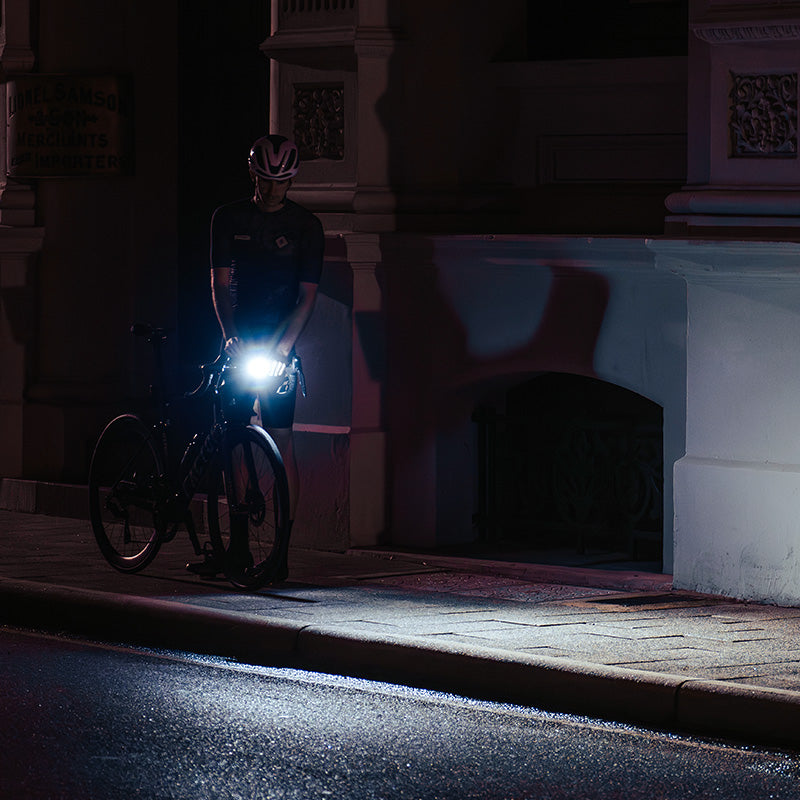
Choosing the right bike light brightness isn’t as simple as picking the highest lumen number. Riders often ask how many lumens are sufficient for their bike lights. The answer depends on several variables, including your riding environment, speed, and ambient lighting conditions.
Instead of focusing purely on the numbers, this guide breaks down bike light lumens by real-world riding scenarios. This ensures you find the perfect balance of visibility, safety, and battery life without overspending or blinding other road users.

Quick Answer: How Many Lumens Do You Need?
The right bike light lumens depend on where and how you ride. There is no single "best" brightness, but these general ranges work for most cyclists:
-
Urban commuting (day & well-lit city streets): 100–400 lumens (front) / 50–100 lumens (rear)
-
Suburban & mixed lighting areas: 400–800 lumens (front) / 50–100 lumens (rear)
-
Night road cycling (dark, unlit roads): 800–1200 lumens (front)
-
Mountain biking & off-road trails: 1200–3000+ lumens (front)
In general, the key is not just maximizing lumens, but matching brightness to your environment. Too little light reduces visibility and reaction time, while too much light in urban areas can reduce safety for others.
Understanding Lumens in Bicycle Lighting
Lumens measure the total amount of visible light emitted by a source. In the context of bike lights, a higher lumen count generally produces a brighter beam. However, actual visibility also involves beam pattern, optical focus, and color temperature.
A well-engineered 800-lumen light with superior optics can actually appear brighter and more useful than a poorly designed 1200-lumen light that scatters its output. Choosing the brightest bike light on the shelf won't help if the beam pattern isn't optimized. Lumen count is an important component, but it is not the sole indicator of real-world performance.
-
Urban Commuting & Daytime Safety (Lit Roads & DRL)
-
Primary Goal: To be seen by motorists, pedestrians, and other cyclists in both broad daylight and well-lit city environments.
-
Recommended Lumens: Daytime (DRL): 100 to 400 Lumens (Front) | 50 to 100 Lumens (Rear)
For cyclists riding predominantly in the city, the lighting strategy shifts between day and night, but the core objective remains the same: maximizing your visibility to others (to be seen) rather than casting a powerful beam to light up a pitch-black path.
Many cyclists overlook the importance of daytime lighting, but using Daytime Running Lights (DRLs) is one of the most effective ways to prevent accidents. Because ambient sunlight is incredibly bright, a standard steady beam can easily get washed out. To cut through intense sun glare and snap a distracted driver's attention, you need a front light capable of producing high-lumen, disruptive flash patterns (strobe mode) in the 100 to 400-lumen range. Rear lights at 50 to 100 lumens during the day significantly reduce the risk of rear-end collisions.
The Danger of "Too Many Lumens" in the City
Excessive bike light lumens in urban areas can actively reduce safety. Using 1000+ lumens on a crowded city bike lane will blind oncoming cyclists, pedestrians, and motorists. For urban environments, look for lights engineered with anti-glare cutoff beams (similar to car headlights) that direct light downward onto the pavement and keep it out of people's eyes.
-
Suburban Commuting & Mixed Terrain
-
Primary Goal: To spot road hazards in intermittent lighting.
-
Recommended Lumens: 400 to 800 Lumens (Front) | 50 to 100 Lumens (Rear)
Cyclists who ride through areas with intermittent street lighting, unlit neighborhood streets, or dark bike paths require more power. A range of 400 to 800 lumens allows you to see potholes, debris, and upcoming turns well before you reach them. It provides an excellent safety margin when transitioning from brightly lit main roads to dark side streets.
Avoid Common Suburban Mistakes
-
The "Tunnel Vision" Trap: Avoid lights with too-narrow beams. You need a wider peripheral spread to spot animals, pedestrians, or car doors opening on the side of the road.
-
Misusing Strobe Mode: Switch from flash mode to a steady beam as soon as the streetlights disappear. Flashing lights in total darkness disorient other road users and make it incredibly difficult for drivers to judge your distance and speed.
-
Night Riding & Fast Road Cycling
-
Primary Goal: To illuminate completely pitch-black roads at high speeds.
-
Recommended Lumens: 800 to 1200 Lumens (Front)
For dedicated night training on rural roads, country lanes, or unlit asphalt, 800 to 1200 lumens is the recommended standard. Because road cyclists travel at higher speeds, the light must project a beam far down the road to allow adequate braking time when encountering gravel, potholes, or wildlife.
Key Considerations for Road Night Riding
-
Distance Vision: The beam pattern must be tightly focused to push the light forward, while still maintaining just enough side light to illuminate road signs and paint lines.
-
Battery & Weight: Pushing 1000 lumens continuously generates heat and drains power quickly. Lights in this category often feature larger battery casings, which add weight to your handlebars. Expect runtimes of roughly 1.5 to 3 hours on maximum output.
-
Mountain Biking & Technical Off-Road Trails
-
Primary Goal: Maximum illumination of unpredictable, pitch-black terrain.
-
Recommended Lumens: 1200 to 3000+ Lumens (Front)
Off-road riding presents the most demanding lighting challenges. Sudden drops, low-hanging branches, roots, and rocks demand high output for safety and performance. For moderate trail riding, 1200 lumens is a baseline minimum. Advanced riders tackling fast downhill singletracks or tight switchbacks frequently run setups pushing 2000 to 3000 lumens, hunting for the brightest bike light available to conquer the terrain.
Why Mountain Biking Needs Extreme Lumens
-
Zero Ambient Light: In dense woods, there are no streetlights or moonlit horizons. The darkness is absolute.
-
Peripheral Depth: Standard road lights create a narrow "tunnel effect." Trail riders need a massive flood beam to illuminate the entire width of the trail, ensuring they can see through sharp corners before turning the handlebars.
Quick Reference: Bike Light Scenarios at a Glance
| Riding Scenario | Recommended Lumens | Core Beam Requirement | Key Design Feature to Look For |
| Daytime Safety | 100 – 400 | Disruptive Flash / Strobe | High-frequency day-flash mode |
| Suburban / Paths | 400 – 800 | Balanced Hybrid | Good side-visibility windows |
| Road Night Riding | 800 – 1200 | Long-Distance Spot | Large battery capacity, reliable mount |
| Off-Road / Trail | 1200 – 3000+ | Ultra-Wide Flood | Dual setup compatibility, heat dissipation |
Product Spotlight: RAVEMEN Bike Front Lights

For riders seeking high-performance options tailored to these specific scenarios, RAVEMEN offers an expertly engineered lineup of front bike lights.
-
For Urban and Road Cyclists: RAVEMEN bike front lights with an innovative dual-lens design, offering an anti-glare T-shaped beam. This gives you a clear cutoff line for urban commuting (avoiding blinding oncoming traffic) while allowing you to activate a high-beam spotlight when transitioning to pitch-black country roads.
-
For Trail and Off-Road Riders: If you need the brightest bike light setup for technical trails, RAVEMEN provides high-output mountain bike lights equipped with durable, vibration-resistant mounting systems, massive flood capabilities, and external wired switches so you can change brightness levels instantly without taking your hands off the grips.
Battery Life and Lumen Management
Higher lumens consume more power exponentially. A light running at an extreme 2000 lumens might deplete its battery in 1.5 hours, whereas dropping that same light down to a 500-lumen medium setting could stretch its life to 6 hours.
Modern premium bike lights feature built-in thermal management and step-down circuitry. If a light gets too hot due to a lack of airflow (e.g., stopping at a traffic light), it will automatically dim itself slightly to preserve the LED components and stretch battery life.
How to Choose the Right Lumen Level
Selecting the correct output involves assessing personal riding patterns. A commuter who rides solely under streetlights needs only 200 lumens. A road cyclist who rides country roads at night should consider 800 to 1000 lumens. A mountain biker must evaluate trail difficulty and speed.
Ultimately, the how many lumens for bike light question has no single answer, but understanding the nuances of bike light lumens provides an excellent starting point. Riders should also consider purchasing a light with adjustable brightness to easily adapt to different conditions.
Frequently Asked Questions
Can a bike light be too bright for city riding?
Yes. Blasting high-lumen lights (especially over 800 lumens) without an anti-glare lens will blind pedestrians, oncoming cyclists, and drivers, making the environment more dangerous for everyone. In cities, beam shaping and proper aiming are vastly more important than raw power.
Should I use the same lumen level for front and rear lights?
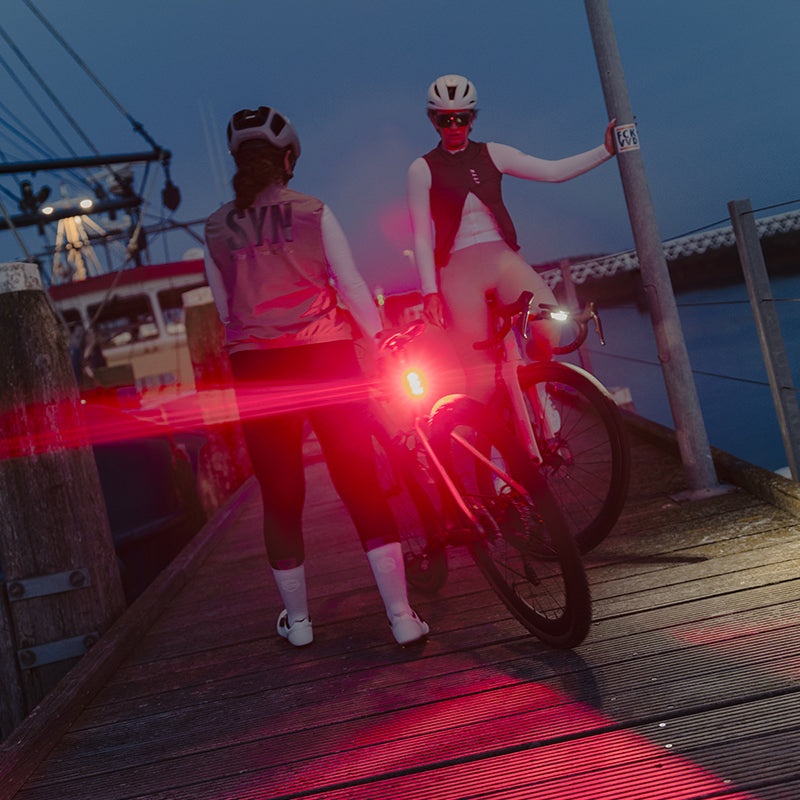
No. Rear lights exist solely to establish your position to traffic behind you, meaning they do not need to illuminate the road surface. Because red light is highly noticeable in the dark, Anything brighter may be unnecessarily distracting or irritating to cyclists riding behind you.
Why does my high-lumen light feel hot to the touch?
High-power LEDs generate an immense amount of heat. Premium aluminum light casings are intentionally designed to act as heat sinks, drawing warmth away from the internal electronics and dissipating it into the air. It is perfectly normal for a light to feel hot when running at maximum output, especially when the bike is stationary and there is no wind to cool it down.

Lasă un comentariu
Toate comentariile sunt moderate înainte de a fi publicate.
Acest site este protejat de hCaptcha și hCaptcha. Se aplică Politica de confidențialitate și Condițiile de furnizare a serviciului.