

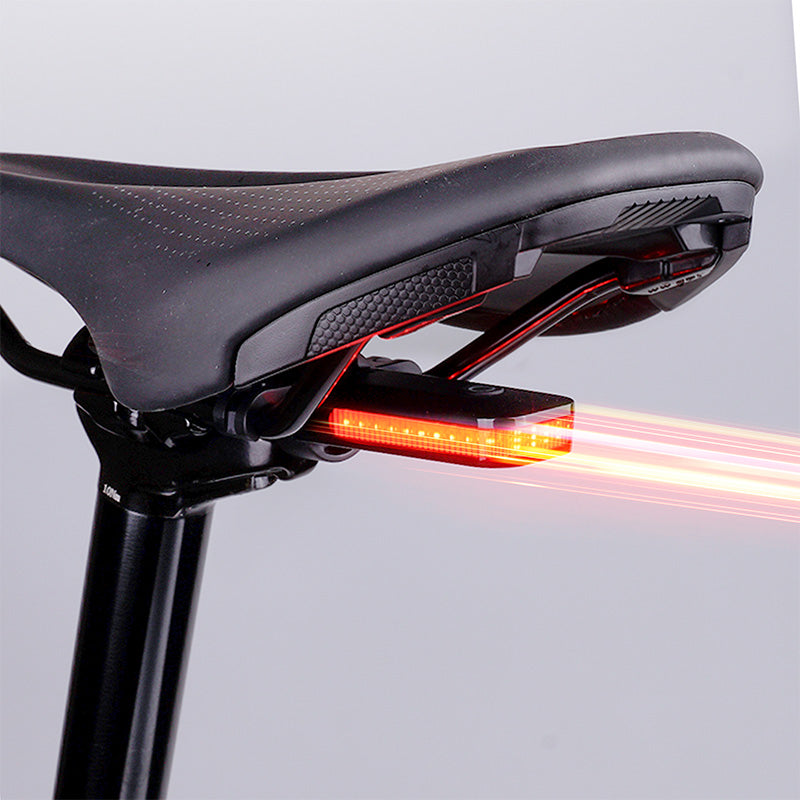
A rear light helps drivers and other road users notice cyclists from behind, especially in low-light conditions and busy traffic. However, even a bright rechargeable bike tail light is only useful when it has enough power to operate throughout the ride. A depleted battery can leave you without an important source of rear visibility when you need it most.
Rechargeable tail lights have largely replaced disposable-battery models, but their battery performance, charging habits, and long-term durability are often misunderstood. This guide covers what to expect from a rechargeable tail light's runtime, how charging and flash modes affect battery life, and how to maintain the light over years of use.

Battery and Power Characteristics of Tail Lights
Bike tail lights generally consume less power than front lights because their primary purpose is to make cyclists visible rather than illuminate the road ahead. Their compact batteries can therefore support extended operation, depending on the light's output and design.
Most rechargeable tail lights use lithium-based batteries, such as lithium-ion or lithium-polymer cells. These batteries offer a practical balance of energy capacity, weight, and size, making them suitable for compact lights mounted on seatposts or beneath saddle rails.
However, battery capacity alone does not determine runtime. The LED's brightness, driver circuit efficiency, selected mode, and power-management features all affect how quickly a battery drains. A high-output steady mode generally consumes more energy than a lower-output mode, while flashing modes may reduce average power consumption depending on their pulse patterns.
What Affects Bike Tail Light Runtime?
Several factors determine how long a rechargeable tail light can operate on a single charge.
-
Brightness and output: Higher brightness settings generally require more power, particularly when the LED stays illuminated continuously.
-
Lighting mode: Steady, flashing, and breathing modes use different power patterns. Their relative efficiency depends on how each mode is programmed.
-
Battery capacity: A larger battery can store more energy, although the final runtime also depends on the light's power consumption.
-
Temperature: Cold conditions can temporarily reduce available battery capacity, making runtime shorter than expected.
-
Smart features: Automatic power control, brake detection, and other electronic functions may consume additional energy, depending on their implementation.
Understanding these factors makes it easier to choose a suitable mode for each ride and interpret the manufacturer's runtime specifications. Maximum runtime figures are usually associated with particular operating conditions, so they should not be assumed to apply to every lighting mode.
USB Interfaces and Charging Time
Most modern USB bike tail light models use a built-in rechargeable battery and a USB charging interface. When choosing a USB bike tail light, check the connector type and charging requirements to ensure convenient recharging between rides.USB-C is common on newer models, while some older lights use Micro-USB. The interface determines how the light connects to a power source, but it does not by itself indicate charging speed or battery capacity.
Charging time varies with battery size, charging current, and the device's charging circuitry. Some compact tail lights recharge in around 1.5 to 3 hours, although the manufacturer's specifications should be used as the reference for an individual model.
A charging indicator can help you understand the charging status. Before disconnecting the cable, check the indicator behavior described in the product manual rather than assuming that a particular color always means the battery is full.
Charging Habits That Help Preserve Battery Health
Lithium batteries gradually lose capacity with age and use. Appropriate charging habits can help limit unnecessary battery stress.
For everyday commuting, recharge the light before its battery becomes critically low, especially if you have an early start or a long ride planned. You do not need to wait until the battery is completely depleted before charging it.
Use a compatible USB power source that meets the manufacturer's requirements. A higher-wattage power adapter does not necessarily charge a tail light faster because the device's charging circuit determines how much power it accepts.
It is also important to keep the charging port dry and free from debris. Never connect a charging cable while the port is wet, and allow any moisture to dry completely before charging.
What to Do If Your Tail Light Will Not Charge
If a rechargeable tail light does not respond when connected to a charger, check a few basic things before assuming the battery has failed.
-
Check the cable and power source. Try a compatible cable and a known-working USB power source if the manufacturer's instructions allow it.
-
Inspect the charging port. Look for moisture, dirt, or visible damage. Do not insert metal objects into the port.
-
Check the charging indicator. Refer to the product manual to understand whether the light is charging, fully charged, or reporting a problem.
-
Allow the light to return to a suitable temperature. If it has been exposed to very cold or hot conditions, follow the manufacturer's guidance before charging it.
-
Consult the product instructions. If the light still will not charge, contact the manufacturer or an authorized service provider rather than attempting to open the battery housing.
These checks can help distinguish a cable or connection issue from a potential battery problem.
How Flashing Modes Affect Runtime
Lighting modes influence both visibility and energy consumption. A steady mode keeps the LED illuminated continuously, while a flashing or pulsing mode varies its output over time. Depending on the design, this intermittent output can reduce average power consumption and extend runtime.
However, flashing modes do not always deliver the same battery savings. Flash frequency, pulse duration, peak brightness, and the electronics controlling the LED all affect energy use. A high-output flashing mode may consume more power than a low-output steady mode, so it is best to compare the manufacturer's runtime figures for the specific modes you intend to use.
Flashing modes can help attract attention during daytime rides, when ambient light may make a small rear light harder to notice. At night, the appropriate choice depends on road conditions, local regulations, and the needs of other road users. On unlit roads, a steady light can provide a consistent reference point for approaching traffic, while an additional flashing light may help attract attention where permitted.
Choosing the Right Mode for the Ride

Different riding environments call for different lighting priorities.
-
Daytime commuting: Consider a visible daytime flashing mode to help your rear light stand out against surrounding traffic and daylight.
-
Night riding on lit roads: Choose a suitable steady or flashing mode that provides clear rear visibility without causing unnecessary distraction.
-
Urban riding with frequent traffic: Use a mode that remains noticeable among vehicle lights and street lighting. Avoid settings that may distract or discomfort other road users.
-
Long commutes: Check the expected runtime for your selected mode and choose a setting that can last through the entire journey.
Battery management should be part of this decision. A light that has sufficient charge for a short trip may need a different setting or a recharge before a longer ride.
It is also possible to combine front and rear light modes rather than using the same setting on both. A steady front light and a flashing rear light, for example, can serve different visibility purposes. The best combination depends on the riding environment, applicable regulations, and the capabilities of each light.
Waterproof Covers and Charging Port Maintenance
The charging port is one area that deserves particular attention on a rechargeable tail light. Rain, road spray, mud, and dirt can accumulate around the port or its protective cover. If moisture or debris reaches the electrical contacts, it may interfere with charging or contribute to corrosion.
A waterproof bike lights rating indicates a level of protection under specified test conditions, but it does not mean every part of the light can be exposed to moisture without limits. The charging port should still be maintained according to the manufacturer's instructions.
Long-Term Storage and Battery Life
A rechargeable bicycle light battery gradually loses capacity over time, even when the light is not used frequently. Heat, prolonged storage at a very low charge, and repeated use all influence battery aging.
If you plan to store a tail light during winter or an extended break from cycling, a few precautions can help maintain its condition:
-
Use an appropriate storage charge. If the manufacturer provides no specific instructions, storing a lithium battery at a partial charge, often around 50% to 70%, is a reasonable general approach.
-
Choose a cool, dry location. Keep the light away from direct sunlight, excessive heat, and damp environments.
-
Check the battery periodically. For extended storage, inspect the charge every few months and recharge when necessary, following the manufacturer's guidance.
-
Avoid prolonged deep discharge. Leaving a lithium battery completely depleted for an extended period can contribute to irreversible capacity loss.
-
Inspect the light before riding again. Check the housing, charging port, mount, and battery indicator before relying on the light for a commute.
How to Recognize Battery Degradation
A gradual reduction in runtime is normal as a rechargeable battery ages. Monitoring your bicycle light battery performance over time can help you identify unusual changes and determine when the light may need servicing or replacement. However, a sudden or substantial change may indicate a problem with the battery, charging connection, or operating conditions.
If your tail light no longer lasts as long as expected, first compare the current runtime with the manufacturer's specifications for the same lighting mode. Consider whether colder temperatures, a change in brightness, or more frequent use of high-output modes could explain the difference.
If runtime remains significantly shorter after a full charge under comparable conditions, or the light repeatedly fails to charge, the battery may have degraded. Follow the manufacturer's advice on servicing or replacing the light rather than attempting to replace a sealed battery yourself.
Product Spotlight: RAVEMEN CL01 Rail-Mounted Bike Tail Light

For riders who want a compact rear light with straightforward charging and battery monitoring, the RAVEMEN CL01 rail-mounted bike tail light offers several practical features for everyday cycling.
The CL01 uses a hidden USB-C charging connector and provides up to 45 hours of runtime on a full charge, depending on the operating mode and conditions. Its battery indicator lets riders check the remaining charge before setting off, helping them decide whether a recharge is needed.
The light also features a horizontally mounted LED strip with a 300-degree wide-angle beam for visibility from multiple directions. Its under-saddle rail mounting design keeps the light integrated with the bike, while IPX6 water resistance supports use in challenging weather conditions.
These features make the CL01 a useful example of how charging convenience, battery monitoring, and a compact mounting design can work together in a rechargeable tail light.
Riders comparing different designs and features can explore the full bike tail lights collection to find a suitable option for their bikes and riding conditions.
Conclusion
A rechargeable bike tail light's performance depends on more than its battery capacity. Lighting mode, temperature, charging habits, and long-term storage all influence how reliably it operates.
By checking runtime specifications, selecting appropriate modes, keeping the charging port dry, and monitoring battery condition, cyclists can make better use of their lights and reduce avoidable charging problems. A simple pre-ride battery check is also worthwhile, particularly before a long commute or a ride that may continue after dark.

Leave a comment
All comments are moderated before being published.
This site is protected by hCaptcha and the hCaptcha Privacy Policy and Terms of Service apply.