

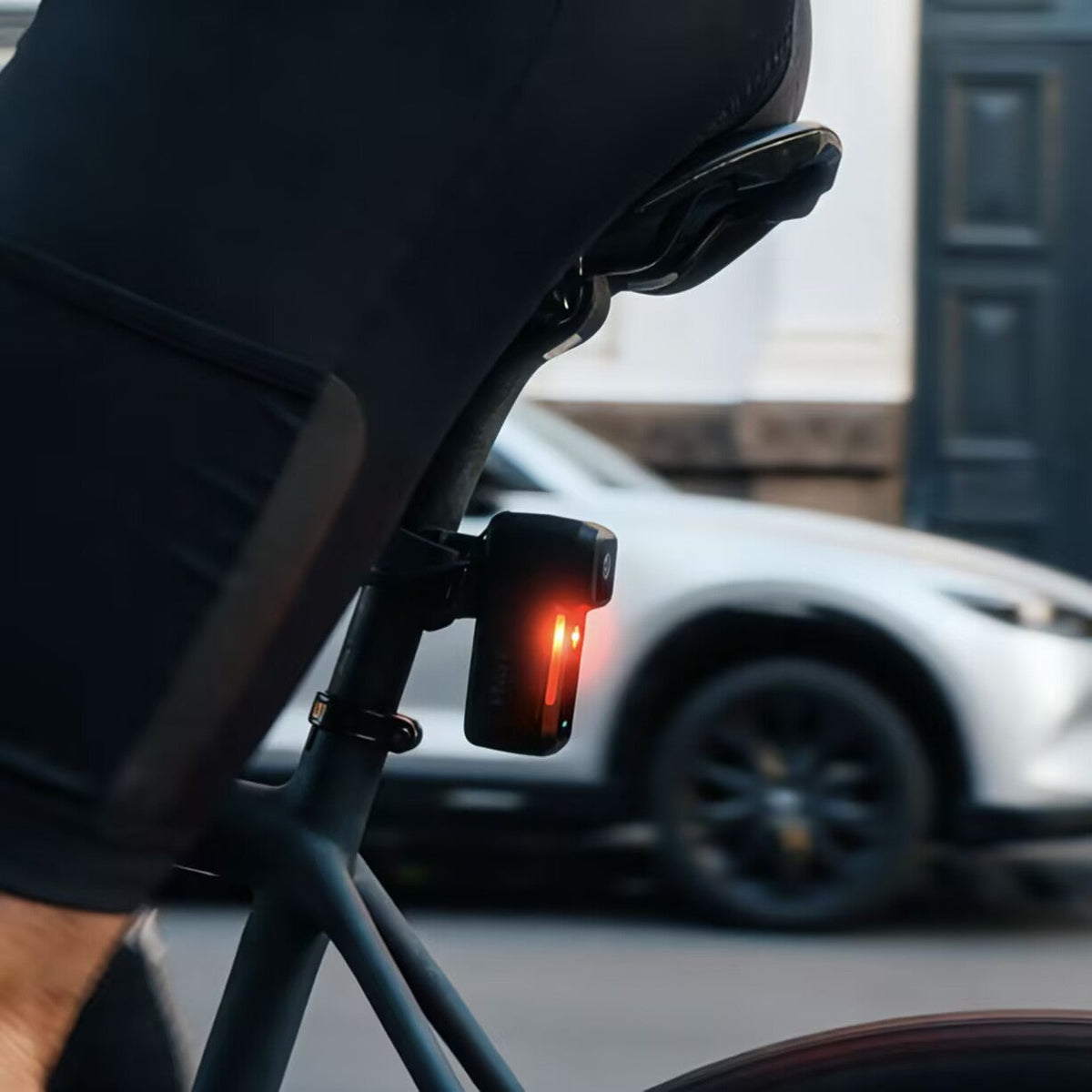
Daylight does not always mean high visual contrast. Bright sun, late-afternoon shadows, changing light, and visually busy traffic environments can make a cyclist less noticeable against the surrounding background.
Bike daytime running lights can add another visual signal during daylight riding. Depending on the product and operating mode, a bike light may be used primarily for rider visibility during the day rather than for illuminating the road surface.
Understanding how daytime lights differ in output, beam pattern, operating modes, runtime, and mounting can help riders choose a setup that fits their daytime riding conditions.
What Are Bike Daytime Running Lights?
Bike daytime running lights are bicycle lights or lighting modes intended to support cyclist visibility during daylight riding.
There is no single technical design that defines every daytime light. Depending on the product, daytime lighting may use different brightness levels, beam patterns, viewing angles, steady output, flashing patterns, or pulsing modes.
Their effectiveness also depends on the relationship between the light, ambient brightness, viewing angle, and surrounding visual conditions. A maximum lumen figure alone therefore does not explain how noticeable a light may appear on the road.
RAVEMEN's bike lights include front, rear, and other lighting options for different riding conditions.
Why Consider Daytime Running Lights for Bikes?
Daytime lights can be useful in several common riding situations:
-
Visually busy roads: Direct sunlight, shadows, reflective surfaces, parked vehicles, and roadside objects can create complex backgrounds. A daytime light adds a distinct visual signal that may help the rider stand out.
-
Intersections and driveways: These locations can place cyclists and turning or entering vehicles on crossing paths. A forward-facing light can add visibility from the front in these situations.
-
Changing ambient light: Fog, tree cover, shifting clouds, and alternating sun and shade can change road contrast during a ride. A powered light continues to generate its own illumination as ambient conditions change, although weather and viewing conditions can still affect how visible it appears.
The usefulness of a daytime light ultimately depends on the riding environment, product design, positioning, and operating mode.
Front vs. Rear Daytime Running Lights
Front and rear daytime lights provide visibility from different directions.
Front Daytime Lights
Front daytime lights are intended to increase front-facing visibility, including around intersections, side streets, and other areas where traffic may approach or cross the rider's path.
Depending on the product, the same light may also provide useful road illumination when riding in darker conditions. RAVEMEN's front bike lights cover a range of forward-lighting applications.
Rear Daytime Lights
Rear daytime lights help make the cyclist more noticeable to traffic approaching from behind, including on roads and bike lanes shared with motor vehicles.
When choosing a rear light, consider brightness together with viewing angle, available modes, runtime, and mounting position. Bags, racks, or clothing should not obstruct the light.
Riders who want lighting coverage from both directions may consider using front and rear lights together when the modes, runtime, and mounting setup suit their riding conditions. RAVEMEN's bike tail lights provide additional rear-light options.
What to Look for in Daytime Bike Lights
A useful daytime light should suit the conditions in which you ride rather than simply offering the highest headline specification.
Daytime Visibility Modes
Some bicycle lights provide operating modes intended specifically for daylight use.
Depending on the product, these may use steady, flashing, pulsing, or other output patterns. Brightness, timing, and behavior can vary between modes.
When comparing lights, consider whether the available daytime settings suit the ambient light and traffic conditions you normally encounter.
Output and Optical Distribution
Daytime visibility involves more than maximum lumen output.
Light output, beam shape, viewing angle, and surrounding light conditions can all influence how a bike light appears to other road users.
For front lights, consider how the beam is distributed rather than judging the product by brightness alone. For rear lights, pay attention to the viewing angles covered by the optical design.
Battery Runtime
Runtime varies according to factors such as operating mode, output level, battery capacity, and product design.
For a daytime light, the most useful figure is the expected runtime in the mode you actually plan to use. Compare that figure with your typical ride duration rather than relying only on the longest advertised runtime.
Mounting Stability
A light needs to remain correctly positioned to serve its intended visibility function.
Before purchasing, make sure the mount works with the intended handlebar, seatpost, or other supported mounting location. A secure installation can help prevent unwanted movement during riding.
Also consider whether bike computers, bags, cables, racks, clothing, or other accessories could block the light or interfere with installation.
Practical Limitations and Riding Considerations
Daytime lights can support cyclist visibility, but they are only one part of riding around traffic.
Daytime Lights Do Not Guarantee Safety
A daytime light cannot guarantee that another road user will see, recognize, or yield to a cyclist.
Riders still need to observe surrounding traffic, follow applicable road rules, signal clearly, and check before turning or changing road position.
Light Positioning Matters
A poorly positioned light may be less noticeable from its intended viewing direction.
For front lights, an excessively high beam angle may also create unnecessary glare for other road users. Position and aim the light according to the requirements of the specific mounting system.
Features Vary by Product
Daytime lights can differ in output modes, beam patterns, mounting requirements, water resistance, runtime, and power-management features.
These differences matter more than simply whether a product is labeled as a daytime light. Compare the specific features that affect your riding environment and normal ride duration.
Frequently Asked Questions About Bike Daytime Running Lights
Are daytime running lights necessary if I ride in bright sunlight?
Not every rider will have the same needs. Bright sunlight can still create shadows, windshield glare, and visually complex backgrounds that affect how easily a cyclist stands out from the surroundings.
A daytime light adds another visual signal, but its usefulness depends on factors such as output, optical design, positioning, and the riding environment.
How do daytime light modes differ from nighttime lighting modes?
Daytime and nighttime modes may use different output levels, beam patterns, or light sequences depending on the product.
Daytime modes are intended to support visibility in brighter ambient conditions. Nighttime settings may also need to provide usable road illumination at the front or appropriate rear visibility.
The intended function of each mode is more important than assuming that daytime always means flashing or nighttime always means steady output.
Do daytime flash modes drain the battery faster than continuous modes?
Not necessarily.
Power consumption depends on the specific light, output level, flash pattern, and operating mode. Compare the stated runtime for the modes you plan to use rather than assuming that flashing or steady operation will always consume more power.
Should I use both front and rear daytime lights?
It depends on the visibility coverage you want and the conditions in which you ride.
A front light provides front-facing visibility, while a rear light helps make the cyclist more noticeable from behind. Using both can provide lighting coverage in both directions when the setup fits your bike and riding environment.

Lasă un comentariu
Toate comentariile sunt moderate înainte de a fi publicate.
Acest site este protejat de hCaptcha și hCaptcha. Se aplică Politica de confidențialitate și Condițiile de furnizare a serviciului.