

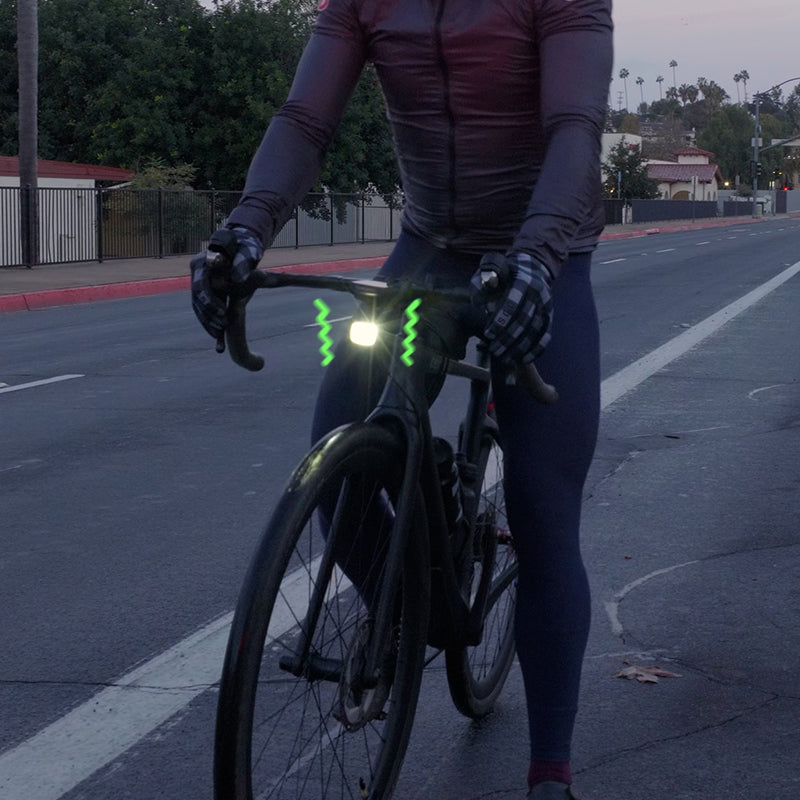
Choosing the best bike headlight is not simply about choosing the brightest option available. While many riders look for the brightest output, real-world visibility depends on beam design, battery performance, mounting stability, and weather protection.
A powerful light designed for a dark trail may not be the best choice for urban commuting, where controlling glare and maintaining visibility for other road users are equally important. Similarly, a compact light may work well for short rides but lack the runtime needed for longer night adventures.
This guide explains the key factors to consider when choosing a bike front light, including beam patterns, battery performance, mounting systems, and waterproof protection, helping you find the right light for your riding style.

What Makes the Best Bike Headlight?
A quality bike headlight should do more than produce high brightness. The best models balance several factors to provide reliable visibility and a safer riding experience.
-
Beam Pattern: Brightness alone does not determine how well you can see. A well-designed beam pattern controls where the light goes, helping you spot obstacles while avoiding unnecessary glare.
-
Runtime: Battery life determines whether your light can support your entire ride. A headlight that performs well for only a short period at maximum brightness may not be suitable for longer commutes or night rides.
-
Mounting Stability: A secure mounting system keeps the light positioned correctly, even on rough roads or trails. A poorly installed light can shift during riding and reduce visibility.
-
Weather Protection: Rain, splashes, and changing weather conditions are common challenges for cyclists. A reliable waterproof bike light should protect against moisture while maintaining consistent performance.
Considering these factors together is more important than focusing on a single specification.
Understanding Bike Headlight Beam Patterns
One of the biggest mistakes riders make is choosing a headlight based only on bike light lumens. While lumens indicate the total amount of light produced, they do not explain how effectively that light is distributed on the road or trail.
For example, a 2000-lumen light with a narrow beam may illuminate objects far ahead but leave the sides of the road dark. A wider flood beam may improve peripheral visibility but may not provide enough distance for high-speed riding.
The right beam pattern depends on where and how you ride.
Flood Beam
A flood beam spreads light across a wider area, making it useful for slower riding, technical trails, and situations where seeing the surroundings is important.
Mountain bikers often prefer flood beams because they help reveal rocks, roots, and uneven surfaces outside the center of the trail.
Spot Beam
A spot beam focuses light into a narrower area, creating longer-distance visibility. It is suitable for faster riding where seeing the road or path ahead is the priority.
However, a narrow beam may create darker areas around the edges, reducing peripheral awareness.
Cut-Off Beam
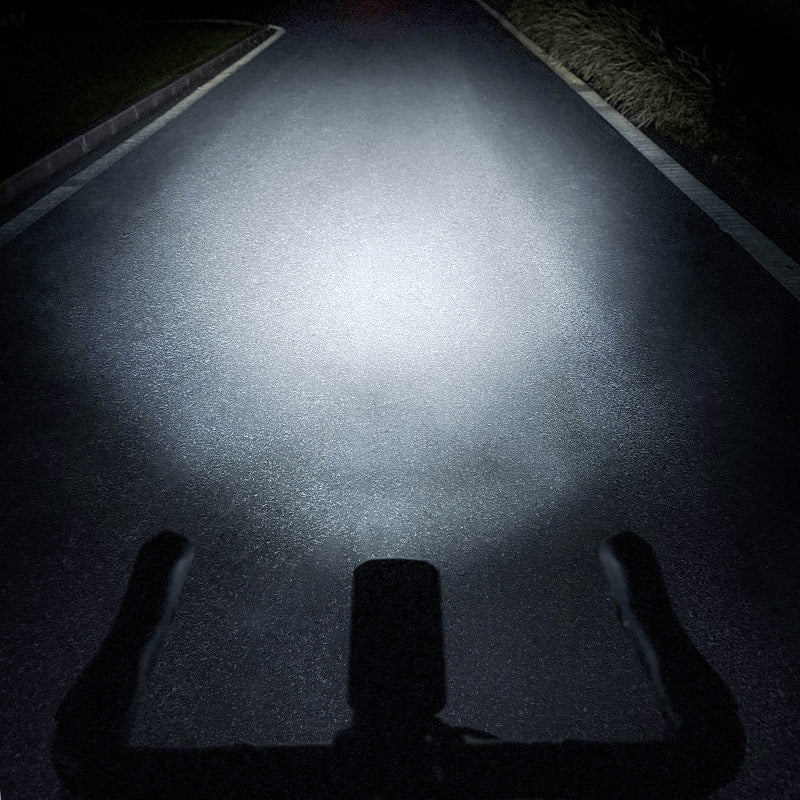
A cut-off beam creates a clear horizontal light boundary that reduces glare for oncoming traffic.
This design is especially useful for urban commuting and road cycling because it allows riders to see clearly without disturbing drivers, pedestrians, or other cyclists.
Many modern bike front lights use cut-off beam technology to provide a balance between visibility and road safety.

Dual Beam
A dual-beam system combines different lighting patterns to provide both near-field and long-distance illumination.
This type of design is useful for riders who frequently switch between different environments, such as commuting through city streets and riding on darker roads.
How Much Runtime Do You Need From a Bike Headlight?
Battery runtime is one of the most important factors when selecting a bike headlight. Many riders search for the brightest bike light available, but maximum brightness alone does not guarantee better performance if the battery cannot support the entire ride.
A light that lasts 20 hours in eco mode may only provide a few hours at maximum brightness. For riders who regularly travel at night, high-mode runtime is usually more meaningful than the maximum advertised number.
Battery performance depends on several factors:
-
Battery capacity
-
LED efficiency
-
Heat management
-
Brightness mode selection
-
Output control technology
A well-designed headlight can maintain stable brightness while using energy efficiently, providing more predictable performance throughout the ride.
Choosing the Right Mounting System for Your Bike Headlight
A reliable mounting system is just as important as brightness and battery performance. Even the best bike headlight cannot perform properly if it moves out of position while riding.
A stable mount keeps the beam pointed where you need it, improves visibility, and prevents the light from distracting you during your ride.
Common Bike Headlight Mounting Options
Handlebar Mount
Handlebar mounts are the most common choice for front lights. They are easy to install, compatible with most bicycles, and allow riders to remove the light quickly for charging or storage. A good handlebar mount should hold the light firmly without damaging the handlebar. Adjustable designs with rubber inserts can provide better compatibility with different handlebar sizes.
Helmet Mount
Helmet-mounted lights allow the beam to follow your line of sight, which can be helpful when cornering on trails or navigating technical terrain. However, helmet lights add extra weight and may become uncomfortable during longer rides. Many mountain bikers combine a handlebar light with a helmet light to achieve both forward visibility and directional lighting.
Inverted Mount
An inverted mounting system places the light underneath the handlebar instead of on top. This design helps create a cleaner cockpit by leaving more space for cycling computers, phone mounts, or other accessories. It also keeps the light closer to the center of the bike, improving overall integration.
When choosing a mounting system, consider your handlebar type, riding environment, and how often you need to remove the light.
Waterproof Bike Lights: What Does IPX Rating Mean?
Weather resistance is an important consideration for riders who commute daily or ride throughout different seasons. Waterproof bike lights are designed to protect internal components from rain, splashes, and changing weather conditions, helping riders maintain reliable visibility in different environments.
A waterproof bike light uses an IP rating to indicate how well it protects internal components from water and dust. For bicycle lights, IPX6 and IPX7 are common levels of water protection.
-
IPX6: Protects against powerful water jets and is suitable for heavy rain and wet road conditions.
-
IPX7: Protects against temporary immersion in water up to a certain depth.
For most cyclists, an IPX6 rating provides sufficient protection for everyday riding, including commuting in rainy conditions.
Best Bike Headlight: Ravemen UR1700 Front Light
The Ravemen UR1700 anti-glare bike front light demonstrates how a modern best bike headlight combines brightness, beam control, and practical riding features. Instead of focusing only on bike light lumens, it balances output, visibility control, runtime, and rider convenience.
With a 1700-lumen output and a cut-off beam design, the UR1700 is designed for riders who need strong visibility while reducing glare for other road users. Its dual-beam system provides both near-field and long-distance illumination, making it suitable for changing riding environments.
For urban commuters, the cut-off beam helps create a safer interaction with traffic by controlling where the light is projected. For darker roads, the additional high-beam function provides extra visibility when more distance illumination is needed.

The UR1700 also uses an inverted mounting design, placing the light beneath the handlebar to create a cleaner cockpit setup. This leaves more room for accessories while keeping the light securely positioned.
The built-in 3600mAh battery provides extended runtime, while the IPX6 waterproof rating helps the light handle rain and wet riding conditions. Its aluminum alloy housing supports heat dissipation during longer periods of high output.
As a bike front light designed around real riding needs, the UR1700 shows why beam quality, mounting design, and durability are just as important as brightness.
Find the Right Bike Headlight for Safer Riding
By understanding how different features affect real-world performance, you can choose from different waterproof bike lights and lighting solutions to find a model that matches your riding habits and provides dependable visibility every time you ride.

Lasă un comentariu
Toate comentariile sunt moderate înainte de a fi publicate.
Acest site este protejat de hCaptcha și hCaptcha. Se aplică Politica de confidențialitate și Condițiile de furnizare a serviciului.