

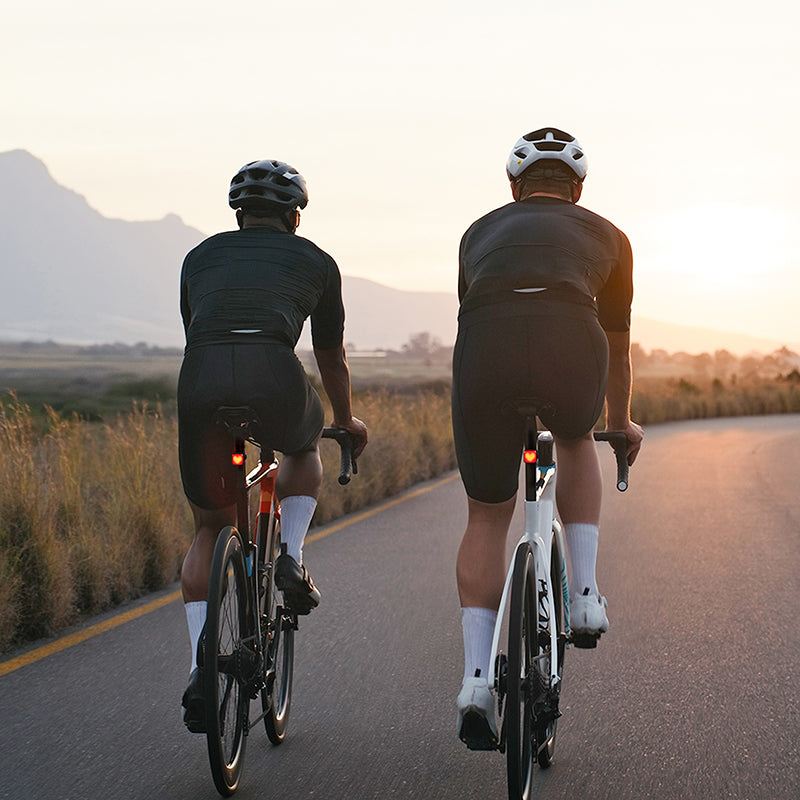
Choosing the right light mode can make a noticeable difference in how easily other road users see you. While a steady beam provides consistent illumination, flashing bike lights can attract attention more effectively in busy or bright environments.
So, which mode should you use? The answer depends on whether you are riding during the day, at dusk, at night, or in an area where you need to illuminate the road ahead. Understanding how each mode works can help you choose the right bike light setting for every ride.

Flashing vs. Steady: Which Gets More Attention?
The main difference between flashing and steady modes is how they attract visual attention.
A flashing light repeatedly changes between bright and dark, creating movement that can stand out against a busy background. This makes flashing particularly useful during daylight or when you want approaching drivers and cyclists to notice your position quickly.
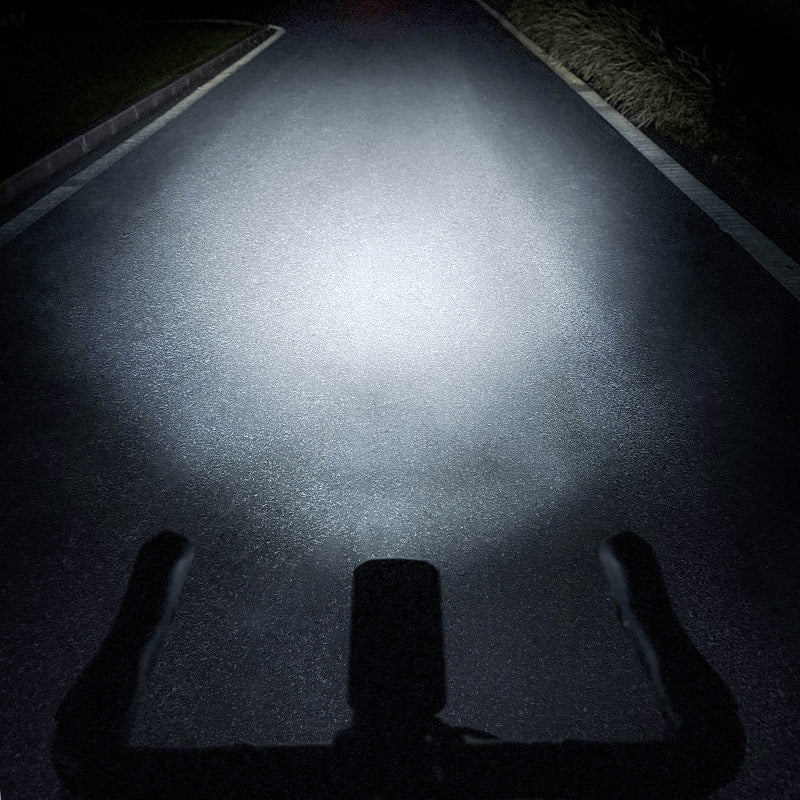
Steady lights, on the other hand, provide continuous illumination. They are easier to use for seeing the road, identifying obstacles, and judging distances in low-light conditions.
For this reason, bicycle safety lights often work best when the mode matches the riding environment. A flashing rear light can help make you more noticeable, while a steady front light can provide continuous visibility and road illumination.
Choosing the Right Mode for Day, Dusk, and Night
Different lighting conditions call for different approaches.
Daytime: Prioritize Visibility
During the day, ambient light can make a bicycle light harder to notice. A flashing mode can help your light stand out from the surrounding environment.
This is where bike daytime running lights can be especially useful. Instead of waiting until it becomes dark, cyclists can use a noticeable light pattern to increase their visibility to drivers during daytime riding.
For rear lights, a flashing mode is often a practical choice when commuting, riding on roads, or traveling through areas with heavy traffic.
Dusk: Balance Attention and Visibility
At dawn and dusk, visibility can change quickly. The road may still appear bright, but shadows and reduced contrast can make cyclists harder to see.
A flashing mode can help attract attention, while a steady light may be preferable when you also need to illuminate the road ahead. If your light offers multiple modes, this is a good time to adjust the bike light setting as conditions change.
Night: Use Steady Light for Illumination
When riding after dark, a steady front light is generally more useful for seeing the road surface, turns, pedestrians, and obstacles.
A rear light can still use a flashing pattern when appropriate, but avoid settings that are excessively bright or distracting for other road users. The goal is to remain visible without creating unnecessary glare.
Flashing Frequency, Brightness, and Glare
The effectiveness of a flashing bike light depends not only on whether it flashes, but also on how often it flashes and how bright it is.
Flashing frequency affects how quickly the light catches attention. A noticeable change between light and dark can make a cyclist easier to recognize against a busy background. However, a very rapid or irregular flash may be distracting, particularly at night or when other road users are nearby. A moderate, clearly visible pattern is often a better balance between visibility and comfort.
Brightness determines how prominent the light appears. Higher brightness can improve visibility in daylight or other bright environments, while lower output may be sufficient in darker conditions. Maximum brightness is not always necessary, especially for rear lights in close traffic.
Glare is another important consideration. A light that is too bright or poorly positioned can make it harder for other road users to see you comfortably. Front lights should be aimed toward the road rather than directly into oncoming traffic. For rear lights, choose a brightness and flashing pattern that helps drivers notice you without creating unnecessary distraction.
When selecting a bike light setting, consider all three factors together: use enough brightness to be visible, a flashing frequency that attracts attention without being distracting, and a beam direction that minimizes glare.
How Light Modes Affect Battery Life
Your choice between flashing and steady modes can also affect how long a bike light lasts between charges.
A steady light produces light continuously, so a high-output steady mode generally consumes more power than a flashing mode with a similar peak brightness. In a flashing mode, the light is not operating at its highest output continuously, which can help extend runtime. Lower-brightness steady modes can also provide a good balance between visibility and battery life.
This makes flashing modes particularly practical when your main goal is to be seen rather than illuminate the road. For example, during daytime riding, a flashing rear light can attract attention without requiring continuous high output. At night, however, a steady front light may be worth the additional battery use because it needs to provide continuous illumination of the road ahead.
When choosing a bike light setting, consider the purpose of the light as well as your expected ride time. Use higher-output or steady modes when you need continuous illumination, and choose flashing or lower-output modes when attention and longer runtime are the priorities. This approach can help you balance visibility, function, and battery life rather than simply choosing the mode with the longest advertised runtime.
How to Combine Front and Rear Light Modes
Using the same mode on the bike front light and bike tail light is not always necessary. A better approach is to consider what each light needs to accomplish. The front light should help you see and remain visible, while the rear light mainly helps approaching road users recognize your position.
Daytime Commuting
Use a noticeable flashing front or daytime mode together with a flashing rear light to improve visibility in traffic. Since daylight reduces the contrast between a cyclist and the surrounding environment, a noticeable light pattern can help you stand out. If the front light is not needed for road illumination, a visibility-focused mode can also help conserve battery power.
Dusk and Changing Light
Choose a front mode that provides enough continuous visibility while using a noticeable rear mode to attract attention from behind. As natural light fades, the front light becomes increasingly important for spotting the road surface and potential obstacles. The rear light can continue to focus on visibility, helping other road users notice you as conditions become darker.
Night riding
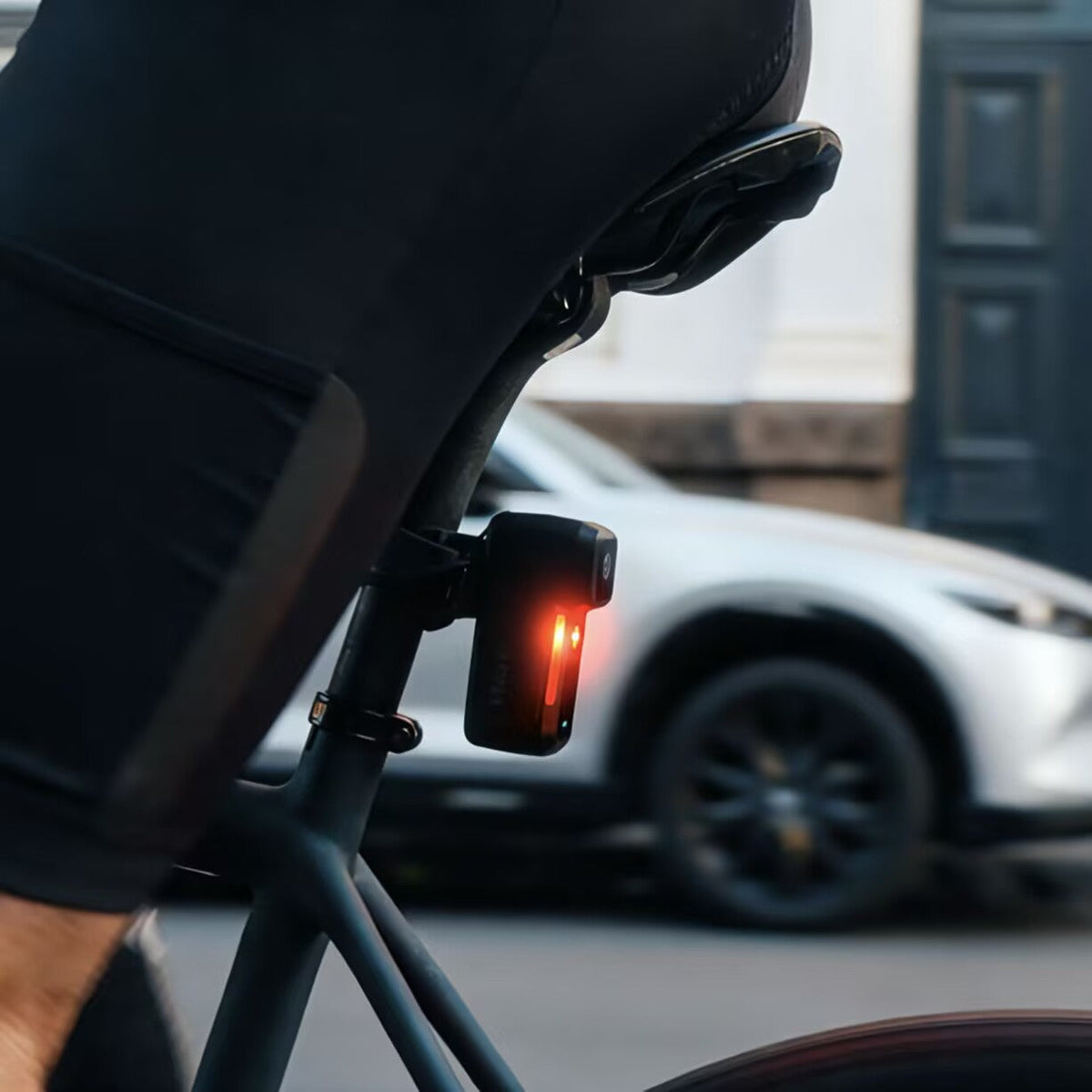
A steady front beam is generally better for illuminating the road. The rear light can use a steady or moderate flashing mode depending on the environment and local requirements. For riders looking for a smarter rear-light setup, the Ravemen NT401 Smart Bike Tail Light combines customizable light patterns with automatic brake detection. Its rear light automatically becomes brighter when braking, adding an extra visual signal for vehicles approaching from behind.

Busy urban roads
A noticeable rear flashing pattern can help distinguish your bicycle from the surrounding traffic, while the front light should provide enough illumination without causing excessive glare.
The best combination is therefore not simply "flashing versus steady." It is about assigning each mode a clear purpose: see the road ahead, be seen by others, and avoid unnecessary distraction.
Which Bike Light Setting Should You Use?
There is no single best mode for every ride. Flashing bike lights are particularly useful when your main goal is to attract attention, especially during daylight and in heavy traffic. Steady lights are more appropriate when continuous illumination is important, particularly for nighttime riding.
A practical approach is to use flashing or attention-focused modes during the day, switch to suitable steady illumination as visibility decreases, and adjust brightness and flash patterns according to traffic and road conditions.
The right bike light setting is ultimately the one that gives you clear visibility while helping other road users recognize you in time. By choosing the mode according to the conditions rather than using the same setting for every ride, you can make your lighting setup both more effective and more comfortable.

Leave a comment
All comments are moderated before being published.
This site is protected by hCaptcha and the hCaptcha Privacy Policy and Terms of Service apply.