

LEDs have become the standard light source for modern cycling because they offer efficient light production, good durability, and precise electronic control. However, two LED bike lights with similar specifications can perform differently on the road. Their optics, power systems, and thermal designs all affect how effectively they illuminate the riding environment.
This guide explains the key factors that influence LED bike light performance and how to evaluate them for commuting, road cycling, and nighttime rides.

Why LED Became the Standard for Bike Lights
LEDs, or light-emitting diodes, produce light through electroluminescence rather than heating a filament. This allows them to generate visible light efficiently while offering greater control over output and operating modes.
Several characteristics make LEDs well suited to cycling:
-
Energy efficiency: LEDs can produce substantial visible light relative to the electrical power they consume, helping extend runtime for a given battery capacity.
-
Durability: Without a fragile filament, LEDs are well suited to the vibration and movement associated with road cycling and off-road riding. Overall durability still depends on the light's housing, electronics, and mounting system.
-
Instant response: LEDs reach their operating output almost immediately, making them suitable for flashing modes and daytime visibility.
-
Flexible output control: Electronic drivers can adjust brightness and support multiple steady and flashing modes to suit different riding conditions.
These advantages make LEDs common in modern front and rear bicycle lights, from compact commuter models to high-output lights designed for unlit roads and trails.
However, the LED itself is only one part of the system. Lens design determines where the light goes, the driver controls how power reaches the emitter, and the housing helps manage heat. Evaluating LED bike lights therefore requires considering the complete light rather than focusing on the emitter or its maximum output alone.
Lumens, Beam Shape, and Real-World Road Performance
Lumens measure the total amount of visible light emitted by a source. They are useful when comparing output specifications, but they do not directly indicate how brightly a particular section of road will appear.
When comparing bike light lumens, consider how the light is distributed across the road, how far ahead it reaches, and whether it provides enough coverage near the front wheel. A well-designed beam can make effective use of its output, while a poorly distributed beam may leave dark areas despite a high lumen rating.
Beam Pattern: Flood vs. Spot
-
A flood beam spreads light across a wider area, helping riders see nearby road surfaces, corners, and obstacles along the sides. This can be useful in urban environments, on winding roads, and on trails where the riding line may change quickly.
-
A spot beam concentrates more light into a narrower area, helping illuminate the road farther ahead. This can be valuable on unlit roads or during faster riding, when cyclists need more time to identify upcoming obstacles.
Neither pattern is universally better. A wide beam may provide excellent near-field coverage but insufficient reach if it lacks a strong central component. A narrow beam may illuminate distant objects while leaving the immediate riding area less visible.
Some bicycle lights combine broad coverage with a more concentrated central beam. When choosing a front light, consider your typical riding speed, ambient lighting, and the distance at which you need to recognize hazards. Riders on well-lit urban streets may prioritize useful near-field illumination, while those riding on dark roads may need a balance of width and distance.
Not every riding environment requires the same optical design. On unlit trails, cyclists may need broad illumination that helps reveal uneven surfaces and obstacles at different heights. For these conditions, beam width, coverage, and distance remain important considerations alongside glare control.
The goal is not simply to choose the brightest light, but to direct enough light where it is useful without creating unnecessary glare for others.
LED Efficiency, Thermal Degradation, and Heat Management
Although LEDs are energy-efficient, they still generate heat during operation. The LED emitter and its driver circuit both contribute to heat production, and operating temperature can affect output, efficiency, and long-term reliability.
As an LED's temperature rises, its light output may decrease. This is one reason a light's initial brightness does not always represent the output it can maintain during a long ride. A model advertised at 1,000 lumens, for example, may not sustain that level continuously under every operating condition.
How Thermal Design Affects Sustained Output
When comparing LED bike lights, look beyond peak output and consider how the light performs in the mode you expect to use. Effective thermal management helps transfer heat away from the LED emitter and distribute it through the light's housing. Aluminum alloy housings, conductive internal components, and carefully designed airflow channels can all contribute to heat dissipation.
For riders who regularly use high-output modes, a light with a well-designed thermal system can be more practical than one that emphasizes peak brightness without explaining how it performs over time.

Battery Capacity and Sustained Brightness
Battery performance determines how long a light can operate before it needs recharging. However, battery capacity alone does not establish how long a light will run at a particular brightness.
Capacity is often expressed in milliamp-hours (mAh), while watt-hours (Wh) provide a measure of stored electrical energy. Because battery voltage can vary, comparing mAh figures alone may not give a complete picture of the energy available.
Actual runtime also depends on LED power consumption, driver efficiency, the selected lighting mode, and operating conditions. A light that draws more power will generally consume its stored energy faster, assuming comparable battery energy and system efficiency.
When evaluating a bike light battery, consider both its capacity and the light's stated runtime. Additional features, such as automatic power control or a power bank function, may also affect how you use the light and how much energy remains available for illumination.
Runtime Ratings: What They Actually Mean
Maximum runtime figures typically refer to a specific low-output or energy-saving mode, rather than continuous operation at maximum brightness. High-output modes usually consume more power and therefore offer shorter runtimes.
Before choosing a light, check which mode the manufacturer uses for its maximum runtime claim. If the product provides separate runtime figures for different modes, compare the setting that best matches your regular rides.
For example, a commuter who rides for 30 to 60 minutes each day may prioritize dependable runtime at a practical medium setting, while someone riding on unlit roads may need higher output and should plan around the shorter runtime available in that mode.
It is also worth considering charging frequency, battery indicators, and access to charging between rides. A clear battery indicator can help riders judge when to recharge, while a light with multiple useful modes offers flexibility when conditions change.
How to Judge Whether an LED Bike Light Is Reliable
Specifications provide a useful starting point, but practical design details can help you assess whether a light is suited to regular use. The most relevant factors include optical performance, thermal management, mounting stability, weather resistance, and ease of operation.
-
Beam pattern quality: Look for reasonably even illumination, useful near-field coverage, and sufficient reach for your riding environment. A high lumen rating cannot compensate for a beam that leaves important areas poorly lit.
-
Thermal design: Consider how the light manages heat during extended use. Housing material and cooling features can provide clues, but sustained performance and the manufacturer's operating guidance are more informative than appearance alone.
-
Output and mode control: A useful range of steady and flashing modes lets riders adapt to different conditions. Clear controls and predictable mode changes are practical advantages, particularly when wearing gloves or riding in low light.
-
Mounting stability: The mount should hold the light securely and maintain its intended angle on uneven roads. A light that shifts during a ride can direct its beam away from the road or toward other road users.
-
Weather resistance: Check the stated water-resistance rating and any limitations provided by the manufacturer. A rating suitable for splashes or light rain should not automatically be interpreted as protection against heavy rain or submersion.
-
Battery management: A clear battery indicator, convenient charging, and realistic runtime information make it easier to plan longer rides and avoid running out of light unexpectedly.
These factors work together. A light with high output may still be unsuitable for a particular rider if its beam distribution, runtime, mounting system, or weather resistance does not match the intended use.
Product Spotlight: RAVEMEN FR1100 LED Front Light
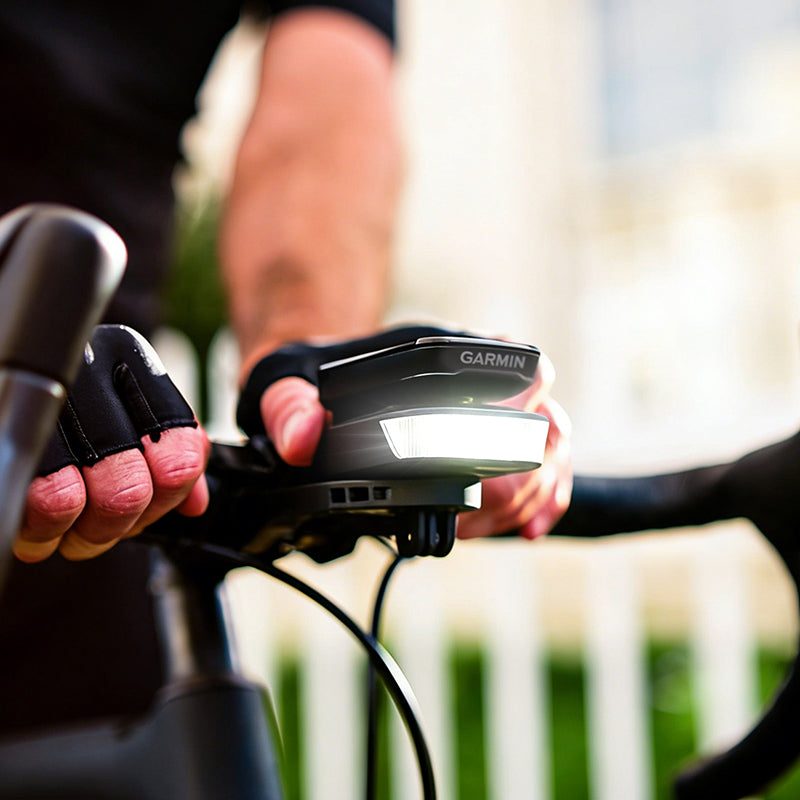
The RAVEMEN FR1100 front light demonstrates how output, optical design, thermal management, and battery capacity come together in a cycling light. It provides up to 1,100 lumens for nighttime riding and has a lens design intended to produce a more even beam pattern, with a maximum beam range of up to 105 meters.
These specifications illustrate why output and beam design should be evaluated together. Maximum bike light lumens indicate the light's potential output, while the lens helps determine how that light is distributed across the road. Riders should still consider their typical speed, ambient lighting, and road conditions when deciding whether a particular output level is appropriate.
Thermal Management for High-Output Use
The FR1100 uses an aluminum alloy housing, an upgraded copper base plate, and airflow grooves to help dissipate heat. These features are designed to improve heat transfer during operation, including in higher-output modes.
Thermal design is particularly relevant when a light is used for extended nighttime rides. Rather than assuming that a maximum lumen figure will be maintained indefinitely, riders should consider the available modes and runtime information when planning their lighting setup.
Battery Capacity and Practical Features
The FR1100 has a rechargeable 2,500 mAh, 3.7 V lithium-polymer battery and offers up to 46 hours of runtime across its available modes. That maximum figure should not be interpreted as runtime at the highest output, so riders should consult the product's mode-specific guidance when estimating how long the light will last on a particular ride.
Alt: RAVEMEN FR1100 provides a long battery life
The light also includes a power bank function for emergency charging of compatible bike computers, as well as an automatic power function that switches the light off after two minutes of inactivity and turns it on when vibration is detected. Its integrated mounting design places the light beneath a compatible bike computer, helping save space around the handlebar area.
These features make the FR1100 worth considering for riders who want a combination of nighttime illumination, daytime warning modes, and an integrated mounting setup. However, its IPX4 water-resistance rating means it is not recommended for use in heavy rain or storms. Riders who frequently cycle in severe weather should account for this limitation when selecting a light.
The FR1100 is one example of how optical design, thermal management, battery performance, and mounting features contribute to the overall usefulness of an LED front light. The right choice still depends on the conditions in which you ride and the performance you need from each lighting mode.
Choosing the Right LED Bike Light for Your Ride
Choosing among LED bike lights is not simply a matter of finding the highest lumen rating or the largest battery. It means understanding how the light's output is distributed, how effectively it manages heat, and how long it can provide useful illumination at your preferred setting.
For urban commuting, glare control, visibility to other road users, and practical runtime may be priorities. For unlit roads, beam reach and consistent illumination become more important. Riders who regularly travel long distances should also pay attention to battery capacity, charging convenience, and the runtime available in the modes they use most often.
By evaluating beam pattern, thermal design, battery performance, mounting stability, and weather resistance together, you can choose a bike front light that better matches your riding conditions and provides dependable illumination beyond the headline specifications.

Leave a comment
All comments are moderated before being published.
This site is protected by hCaptcha and the hCaptcha Privacy Policy and Terms of Service apply.