

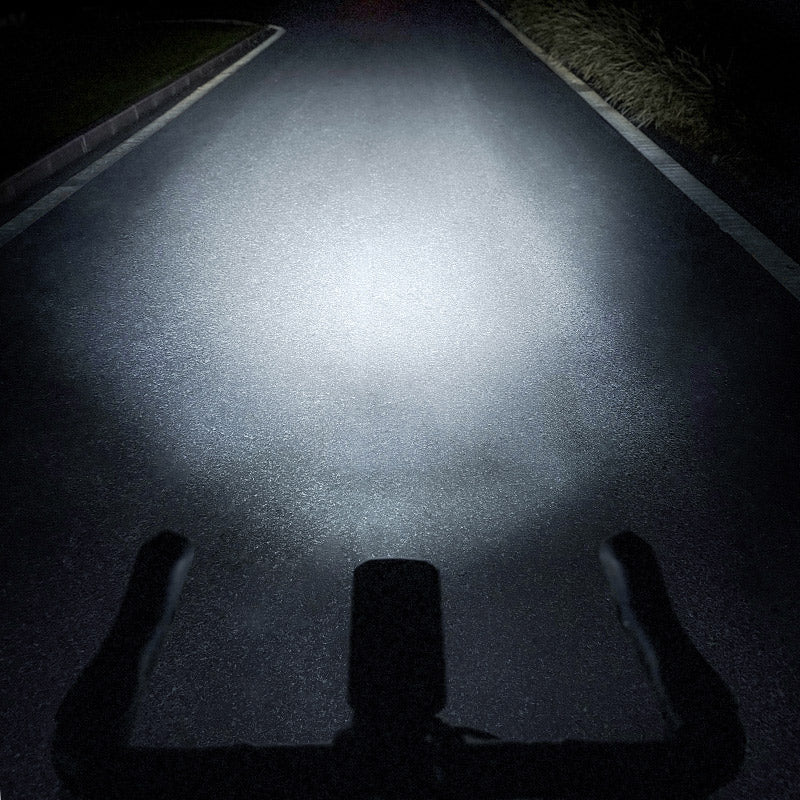
Remembering to turn on a bike light before every ride can be easy to overlook, especially when conditions change during a commute. A ride that starts in daylight may end after sunset, or a route may pass through tunnels and shaded areas. Bicycle lights that come on automatically can reduce this extra step by using sensors to control when and how the light operates.
However, automatic lighting does not always work the same way. Some lights use motion detection to turn on and off, while others use ambient light sensors or brake detection for specific visibility functions. Understanding these technologies can help you choose a light that matches your riding habits.
This guide explains how the main automatic lighting technologies work, their practical benefits and limitations, and what to consider when choosing an automatic bike light.

How Automatic Bike Lights Work
Automatic bike lights generally use three types of sensing technology: motion sensors, ambient light sensors, and brake sensors. These technologies can be used separately or combined, depending on the product and its intended purpose.
Motion Sensors: Automatic Activation Through Movement
Motion sensors detect movement or vibration to control the light automatically. When the bike remains stationary for a set period, the light can turn off. Once movement is detected again, it can turn back on without requiring the rider to press a button.
This is one of the simplest forms of automatic lighting and is particularly useful for everyday riding. It can help prevent a rider from accidentally leaving a light running while the bike is parked and reduces the need to manually activate the light at the beginning of every ride.
The exact activation behavior varies between products. Some lights respond to vibration, while others may use more specific movement thresholds. Riders should check how a particular light handles automatic activation rather than assuming every model works in the same way.
Ambient Light Sensors: Responding to Changing Conditions
Ambient light sensors measure surrounding brightness and can help a light respond to changes between daylight and darkness. Depending on the design, a light may remain off or use a daytime visibility mode in bright conditions and switch to a different output as the environment becomes darker.
This can be useful for riders who frequently move between different lighting conditions. For example, an ambient sensor may help a light respond when a cyclist enters a darker area or when daylight fades during an evening commute.
However, ambient light sensing is different from motion-based activation. A product with an ambient light sensor does not necessarily turn on simply because the bike starts moving, and a motion-activated light does not necessarily adjust its output based on surrounding brightness.
Brake Sensors: Increasing Rear Visibility
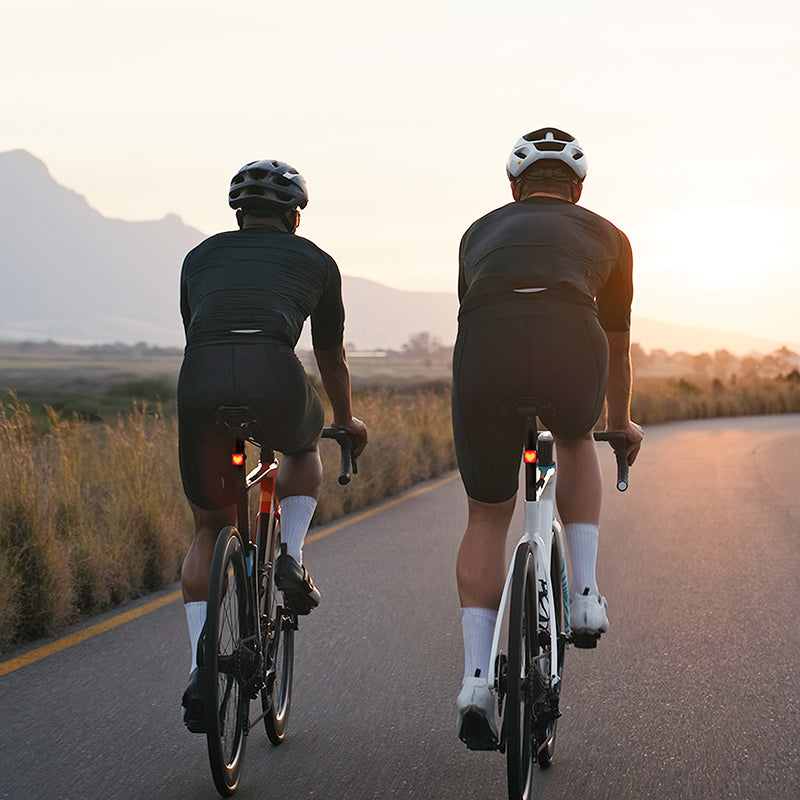
Brake sensors are most commonly associated with rear lighting. A bike brake light can detect deceleration and temporarily increase its brightness or change its lighting behavior to alert traffic behind the cyclist.
This feature is particularly useful in traffic, where following drivers may need an additional visual cue when a cyclist slows down.
Some systems use motion sensing to detect deceleration, while other designs may use dedicated brake-related hardware. Because implementation varies, riders should check the manufacturer's specifications to understand how a particular brake detection system works.
A brake sensor is therefore a specialized automatic feature rather than a requirement for every automatic bike light. A front light, for example, may focus on automatic activation rather than braking detection.
Why Use an Automatic Bike Light?
The main benefit of automatic lighting is convenience, but the advantages extend beyond simply reducing the number of buttons a rider needs to press.
Reduce the Risk of Forgetting to Turn the Light On
One practical advantage of bicycle lights that come on automatically is that activation becomes part of the light's operation rather than a separate task for the rider.
For commuters and frequent cyclists, this can be especially useful when a ride begins or ends under changing conditions. Automatic shutoff can also prevent unnecessary battery drain when the bike is left stationary.
The goal is not to remove rider control completely, but to make routine lighting easier and more consistent.
Reduce Unnecessary Battery Drain
Automatic shutoff can help prevent a light from remaining powered on while the bike is parked. This does not change the light's rated runtime, but it can reduce unnecessary battery use between rides.
Battery performance should still be evaluated based on the lighting modes a rider actually uses. A light's maximum runtime may vary significantly between low, high, and flashing modes, so manufacturer specifications should be checked before purchase.
Improve Visibility With Less Manual Adjustment
Automatic features can also reduce the need to constantly monitor the light during a ride.
For example, a motion-activated front light can automatically respond when the bike starts moving. An ambient light sensor may adjust operation according to surrounding brightness, while a brake sensor can increase rear visibility during deceleration.
These are different approaches to automation, and the most useful feature depends on the type of riding you do.
What to Consider When Choosing Bicycle Lights That Come on Automatically
When evaluating bicycle lights that come on automatically, consider more than the sensor itself. Brightness, battery life, mounting, weather resistance, and controls all affect how practical the light will be.
Brightness and Beam Control
For a front light, automatic activation is only useful if the light provides sufficient illumination for the riding environment.
Consider the light's maximum output, available modes, and beam control. An adjustable beam angle can help riders position the light according to their riding style and road conditions.
A well-positioned beam should provide useful forward illumination without unnecessarily directing excessive light toward other road users.
Battery Capacity and Runtime
Battery capacity affects how often the light needs to be recharged. A longer runtime can be especially valuable for commuters, touring cyclists, and riders who spend extended periods on the road.
Look at runtime across different modes rather than focusing only on the maximum figure. If the light also works as a power bank, that can provide additional value on longer rides, particularly when a bike computer needs emergency charging.
Mounting Flexibility
The mounting system affects both everyday convenience and the overall bike setup.
A secure mount should keep the light stable while riding, while a quick-release design can make charging and handling easier. For riders using multiple accessories, integrated mounting solutions can also help save handlebar space.
Compatibility is another important consideration. Check whether the light works with the bike computer mount standard you use and whether additional adapters are included.
Weather Resistance
Cyclists may encounter rain, splashes, and wet road conditions even when precipitation is not part of the original plan.
An IPX6-rated light is designed to withstand powerful water jets, making this level of water resistance useful for riders who regularly cycle in wet conditions. However, IPX6 does not mean the light is designed for submersion.
Controls and Battery Indicators
Automatic operation should not eliminate practical manual controls. Riders should still be able to check the battery level and adjust the light when necessary.
A clear battery indicator can make it easier to know when charging is required. A simple interface is particularly useful when making adjustments before or during a ride.
Product Spotlight: Ravemen FR1000 Dual-Purpose Front Light

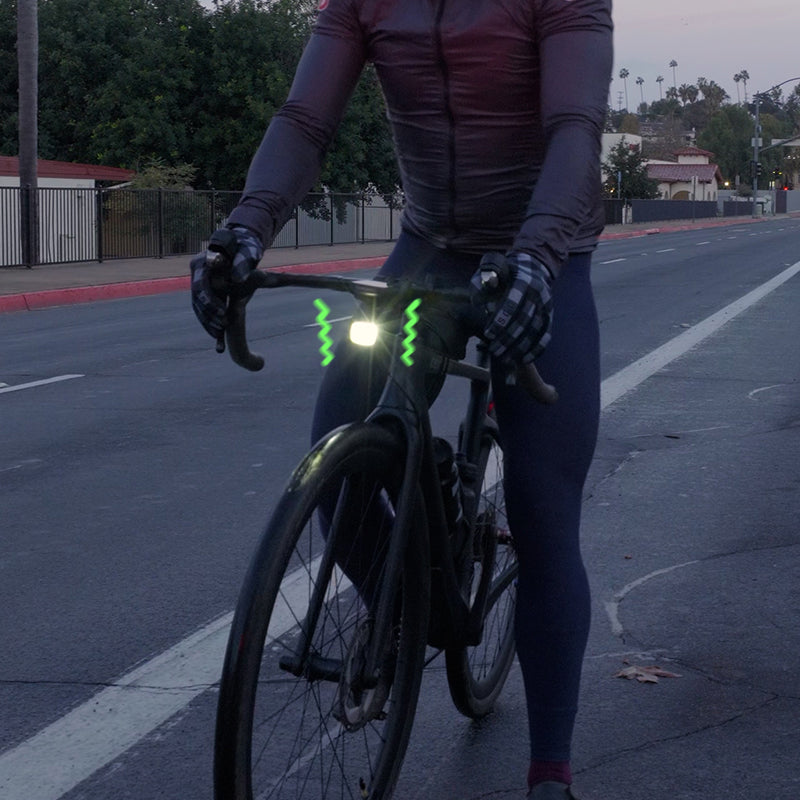
The FR1000 bike computer-mounted front light is a practical example of a motion-activated automatic front light. It combines automatic power control with a dual-purpose bike computer mount, offering a cleaner and more convenient setup for everyday riding.
-
Motion-Activated Auto On/Off: The FR1000 turns off automatically after 2 minutes of inactivity and turns on when vibration is detected, helping simplify light operation during daily rides.
-
Dual-Purpose Design: It combines a front light and bike computer mount in one unit to save handlebar space. The mount is compatible with Garmin systems by default and includes Wahoo and Bryton adapters.
-
Adjustable Beam Angle: The headlight angle can be adjusted from 0–30° to help riders position the beam according to their riding needs.
-
1000 Lumens & Long Runtime: With 1000 lumens of output, a 3000mAh battery, and up to 39 hours of runtime, the FR1000 is designed for extended rides. The battery can also provide emergency charging for bike computers.
-
Flexible Mounting & Durability: The quick-release mount makes charging and handling easier, while the detachable GoPro-style bottom mount provides additional accessory compatibility. Its aluminum alloy housing improves heat dissipation, and the IPX6 rating helps protect against rainy conditions.
-
Battery Indicator: Riders can check the battery level when the light is off. The indicator shows green for 40%–100% battery, red for 5%–40%, and flashing red below 5%.
The FR1000 combines automatic operation, adjustable lighting, integrated mounting, and long-lasting performance, making it a practical option for riders looking for a versatile front bike light.
Who Should Use an Automatic Bike Light?
Automatic bike lights are especially useful for riders who want consistent visibility with less manual control.
-
Daily commuters: Helpful when rides span changing light conditions or include frequent stops.
-
Urban riders: Automatic activation and shutoff can simplify stop-and-go riding.
-
Riders in changing light: Ambient light sensing can respond to transitions between daylight, shade, and darkness.
-
Safety-focused riders: Brake detection can improve rear visibility during deceleration.
Using Automatic Bike Lights Effectively
Automatic features can simplify lighting, but riders should still understand how their particular light operates.
Match the Light to the Riding Conditions
Not every automatic light responds to environmental changes in the same way. A motion-activated light primarily handles power control, while an ambient light sensor may respond to changes in brightness.
If your light does not automatically adjust brightness or lighting modes, use the appropriate manual bike light setting for the conditions.
This is particularly important when moving between daylight, darkness, tunnels, and other environments where visibility requirements change.
Keep Manual Controls Available
Automatic operation is designed to make routine use easier, not to replace rider judgment.
Before a ride, make sure you know how to turn the light on and off manually and how to change its available modes. This gives you more control when conditions change or when you want a different lighting output.
For a motion-activated light such as the FR1000, the automatic function focuses specifically on powering the light on and off. Other adjustments remain under the rider's control.
Check the Battery Before Riding
Automatic operation does not eliminate the need to monitor battery level.
Checking the battery indicator before a longer ride can help avoid unexpected charging needs. The FR1000 makes this easy with its three-stage battery indication, including a flashing red warning when the battery falls below 5%.
The Right Automatic Bike Light Enhances Your Riding Experience
Automatic bike front lights are not all designed to work in the same way. Motion sensors can automate power control, ambient light sensors can respond to changing brightness, and brake sensors can improve rear visibility during deceleration.
Understanding the difference between these automatic technologies makes it easier to choose a lighting setup that provides the right combination of convenience, visibility, and control for every ride.

Leave a comment
All comments are moderated before being published.
This site is protected by hCaptcha and the hCaptcha Privacy Policy and Terms of Service apply.