

For cyclists, a reliable bike light isn’t just an accessory; it’s essential safety gear. Whether you’re weaving through city traffic on your morning commute or tackling dark country lanes after sunset, the right lighting setup transforms night riding from a nervous experience into a confident one. Thanks to major advances in LED and battery technology, today’s bike lights are brighter, smaller, and longer-lasting than ever before. But with so many options on the market, understanding what you actually need, from lumens and beam patterns to mounting systems and battery life, can be overwhelming.
This guide breaks down everything you need to know to find the best bike lights for your riding style, whether you’re navigating well-lit streets or pitch-dark trails.

Why Investing in the Best Bike Lights Matters for Every Rider
Many cyclists underestimate how much a quality light improves safety and comfort. A dim or poorly aimed light forces you to ride slower and react later, increasing crash risk. Meanwhile, a properly chosen light lets you see hazards early, signals your position to drivers, and reduces eye strain during long night rides. For daily commuters, a dependable light also eliminates the frustration of dead batteries or broken mounts mid-ride. Simply put, the best bike lights for commuting and night riding are not an expense; they are a long-term investment in your safety and riding enjoyment.
Furthermore, modern high-quality lights offer features like daytime pulse modes and USB-C fast charging, which make them far more versatile and convenient than budget alternatives. Investing upfront means you’re less likely to find yourself stranded in the dark with a failed light.
How to Choose the Right Bike Lights for Commuting and Night Riding?
Selecting the ideal bike light requires balancing several technical factors. Below are the key considerations, broken down by feature.
Lumens: Matching Brightness to Your Riding Environment
The term "lumens" measures the total visible light output.
-
For urban commuting on well-lit streets, a front light with 200–500 lumens is typically sufficient for both seeing and being seen.
-
For night riding on unlit paths or rural roads, you’ll want 500–1000 lumens to clearly illuminate potholes and debris far ahead.
-
For high-speed descents or trail riding, 1200+ lumens with a helmet-mounted secondary light provides necessary depth perception.
Rear lights should deliver 50–100 lumens for city use and at least 100 lumens for rural or high-speed conditions, with many models now offering daytime pulse modes that cut through sunlight.
Beam Pattern: Why Cutoff Designs Are Safer for Road Use?
Lumen output is only half the picture. The beam shape determines what you see and whether you blind others.
Cutoff (StVZO-approved) beams project a flat, shaped pattern with a sharp horizontal cutoff, directing light onto the road while preventing glare for oncoming traffic. For commuting and shared paths, this is the safest and most courteous choice. Symmetrical beams illuminate uniformly in all directions, which is useful for mountain biking but can blind drivers when used on roads. Some modern lights offer both high and low beam modes with cutoff patterns, mimicking automotive headlights for maximum versatility.
Power Source: Rechargeable, Battery, or Dynamo?
Most best bike lights for commuting now use USB-C rechargeable lithium batteries, offering fast charging, universal compatibility, and 5–10 hours of runtime on medium settings. Disposable battery lights (AA/AAA) are becoming rare but serve as emergency backups. Dynamo-powered lights, especially hub dynamos, provide unlimited runtime without charging, making them ideal for year-round commuters and tourers, though they require wheel installation and a higher upfront cost. For most riders, a quality USB-C rechargeable light offers the best balance of convenience and performance.
Weather Resistance and Build Quality
If you ride in rain or year-round, look for at least an IPX4 rating (splash-resistant from any direction), with IPX5 or IPX6 ideal for heavy downpours. Aluminum housings dissipate heat better than plastic, which is critical for high-lumen lights that run continuously. A robust build also means fewer failures from vibration and road shock.
Mounting Systems: Keeping Your Cockpit Clean and Secure
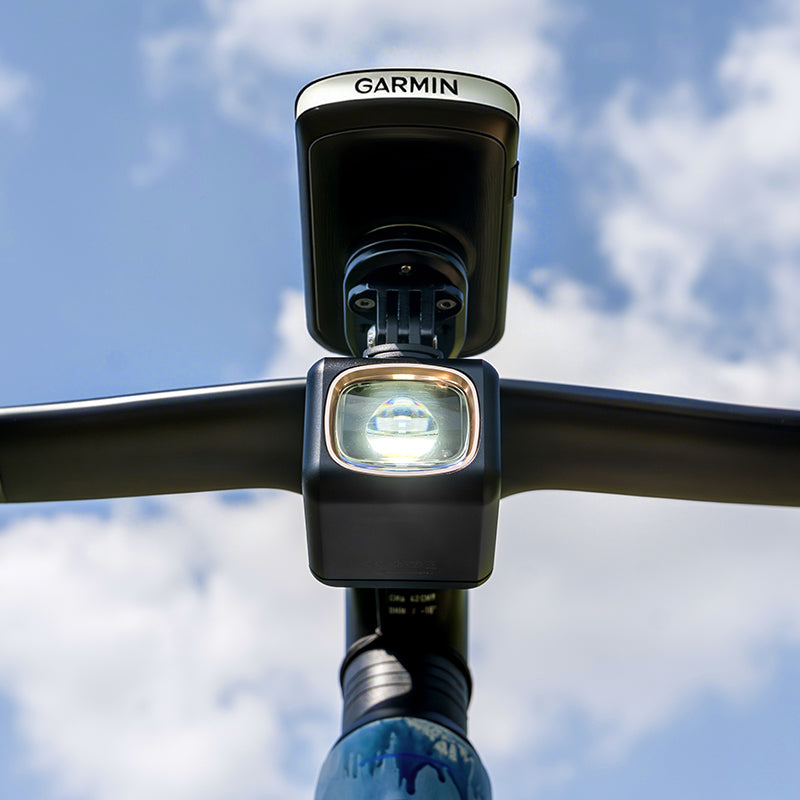
Modern handlebars are crowded with computers, phones, and bells. Stackable designs that integrate with Garmin-style mounts allow you to place a bike computer on top of the light or vice versa, saving precious space. Some lights also offer GoPro-style adapter mounts for under-bar positioning. Quick-release brackets let you swap the same light between multiple bikes, and a tether or lanyard keeps your light attached even if the mount fails.
Essential Tips for Maximizing Safety During Night Rides
Beyond choosing the right hardware, how you use your lights greatly affects your safety. The following tips address common oversights.
Always Run Both Front and Rear Lights, Even in Daylight
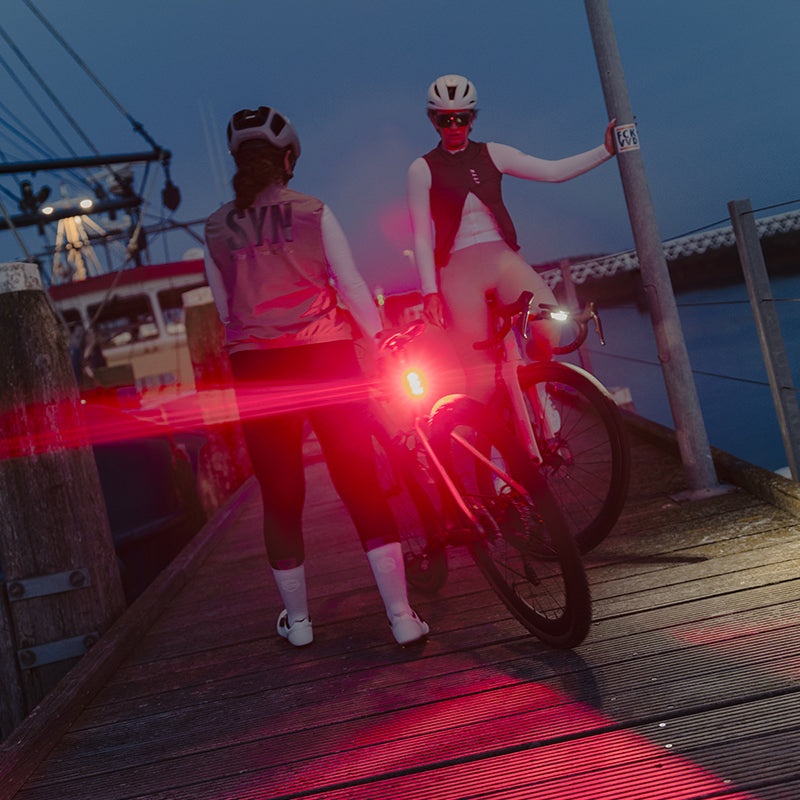
Many cyclists ride with only a front light, but rear lights are equally critical for alerting overtaking traffic. Studies show that daytime running lights (100–200 lumens front, 50–100 lumens rear in pulse mode) reduce collisions significantly. A bright front light does little to protect you from vehicles approaching from behind, especially in low-light or rainy conditions. Always run both for full 360° visibility.
Aim Your Lights Correctly to Avoid Blinding Others
A common mistake is aiming the front light too high. For cutoff beam lights, align the horizontal cutoff just below the eye level of oncoming drivers (typically pointing slightly downward). For symmetric beams, angle them down, so the brightest part of the beam hits the road 10–20 meters ahead. A poorly aimed light not only annoys others but also reduces your own effective vision.
Carry a Backup Light for Long Night Rides
Even the best rechargeable lights can die mid-ride, especially in cold weather that reduces battery capacity. A small, lightweight backup light (200–300 lumens) or a pair of USB-rechargeable mini lights can save you from riding blind. Many commuters keep a spare rear light in their saddlebag at all times.
Understand Local Lighting Regulations
Bike light laws can vary depending on where you ride in the U.S. For example, in California, cyclists riding at night are legally required to use a white front light visible from at least 300 feet, along with rear reflectors and side visibility equipment. Similar rules exist in many other states, though the exact visibility distances and reflector requirements may differ.
In most urban and suburban riding conditions, a front light with at least 200 lumens and a shaped cutoff beam is generally considered a practical and road-friendly setup.
Recommended Bike Lights for Commuting and Night Riding
For reliable, high-performance bike lights designed for both commuting and night riding, RAVEMEN offers a range of thoughtfully engineered solutions. Their bike front lights combine high lumen output with smart beam patterns, USB-C charging, and durable IPX6 weather resistance. For dedicated commuting bike lights, Ravemen’s lineup features stackable designs compatible with Garmin-style mounts, multiple brightness modes for day and night use, and long battery runtimes that easily handle round-trip commutes.

Enjoy Safer Night Rides with the Best Bike Lights
Choosing the right bike light isn’t about chasing the highest lumen count; it’s about matching brightness, beam pattern, power source, and mounting system to your specific riding environment. Whether you’re a daily commuter navigating city streets or a weekend rider exploring unlit roads, the best bike lights for commuting and night riding are those you can rely on in every condition. Invest in quality, ride with visibility, and never let darkness dictate your route.
Bike Lights FAQs
Can I use the same bike light for both commuting and mountain biking at night?
Yes, but you’ll need to adjust your expectations. A 500‑lumen light with a cutoff beam is ideal for commuting but insufficient for fast trail riding. For mixed use, consider a light with interchangeable optics or one that offers both a high‑output symmetric mode for trails and a lower, shaped beam for roads.
How often should I replace or recharge my bike light batteries?
If your light uses a built‑in rechargeable battery, expect 500–1000 charge cycles before capacity noticeably degrades, roughly 2–3 years for daily commuters. For battery‑powered lights, replace disposable batteries when the output dims. Many USB‑C rechargeable lights also support pass‑through charging, allowing you to run the light while plugged into a power bank.
Do I really need a rear light if my front light is very bright?
Absolutely. Rear lights provide a completely different safety function: they signal your presence to overtaking traffic. A bright front light does little to protect you from vehicles approaching from behind, especially in low‑light or rainy conditions. Always run both front and rear lights for full 360° visibility.

Leave a comment
All comments are moderated before being published.
This site is protected by hCaptcha and the hCaptcha Privacy Policy and Terms of Service apply.